

I assigned the Nora Ephron essay “A Few Words About Breasts” to my essay-writing class (Bulgasari helpfully provided a link to that essay in this comment), and the reaction was quite interesting.
Some of the students claimed they were so shocked that teenaged American girls are so anxious about breast development, claiming adolescent Korean girls aren’t. (Lime calls bullshit on that, however.) Others admitted they were — and in a couple of cases, still are — anxious about it.

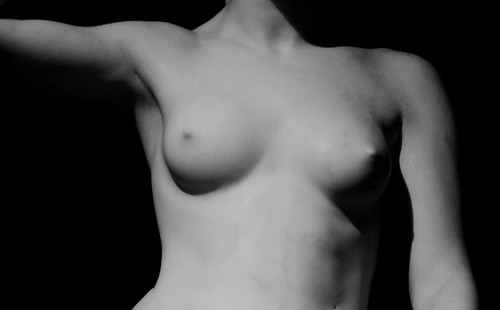
Others found the myths Ephron discusses amusing, like this one about her friend’s response to the failure of young Ms. Ephron’s breasts to appear:
“Don’t worry about it,” said my friend Libby some months later, when things had not improved. “You’ll get them after you’re married.”
“What are you talking about?” I said.
“When you get married,” Libby explained, “your husband will touch your a breasts, and rub them and kiss them and they’ll grow.”
They were like, “People actually believed that?” (No, I did not make a retort about Fan Death. I did, however, suggest they think back to middle school and all the silly things they heard other kids say, and briefly believed. Surely that’s universal.
(I remember hearing from classmates that if a classmate had big breasts, it meant she was sleeping around. I also remember hearing that if you swam in the North Saskatchewan River — which looks nice in this video, though I had the sense was toxic and polluted around the town I lived in, thanks to the pulp and paper mill nearby — your penis would shrink and fall off. Which was odd, since nobody ever swam in the river, so how did they know?)


The most stunning comment, for me, though, was what one young man said about being assigned the essay. He said he was surprised that I had chosen that essay for us to read and discuss in a university class. Not because it was too hard or too easy, but because it was about women’s issues.
An essay about women’s body images? In a classroom that’s 70% women? In a society where body image is a huge obsession? And where (in my experience) all too little frank and critical discussion of the insanity of that obsession is evident?
(Over the last couple of years, I’ve found my students to be quite articulate on the subject, but not nearly so critical. Most discussions I’ve witnessed have ended with some kind of impassioned defense of why women ought to be able to get plastic surgery if they want, and not just to “improve” their looks, but to enable them to can compete in the job market. Because yeah, your bust and your back end are really exactly what should determine hiring, and not, say, competence. But that’s for another discussion.)
So when I said to this guy, “Look around you! You’re outnumbered! This class is mostly women, right?” his response floored me.
Him: “Yeah, but we’re 30% men.”
Me: “So? Learning more about women is a bad thing?”
Him: “No, but, um…”
At first, I was (quietly, not aloud) all, “What the hell, man? Any presence of men in a classroom means we should just throw away all issues that might be labeled ‘woman’ issues?” There was this spiraling sense of annoyance at what I interpreted as a desire to marginalize women’s issues so we could focus on important (male) issues.


And then I realized he was embarrassed to be reading an essay about breasts and discussing it with women. Which, yeah, is juvenile by my standards, now, but you know, by Korean socialization, probably is less so. I’m sure it’s the first time he’s had to do so in a classroom, at least, outside of the context of a stuffy sex-education class where technical terms were used, and even the teacher was feeling uptight about it.
This realization brought back memories of my own reaction to being assigned the essay back in Freshman English. But I would never have dared to protest my own embarrassment. I knew that my blushing at reading an essay that was not really about breasts, but about growing up in a society with a silly fixation on them, was quite silly. It seems, though, that for this guy — and a number of other students — the embarrassment was not only normal, but somewhat of a requirement for politeness, or decency, or whatever.

Poor students. Since I’m going to be asking them to write a personal response; not quite an essay, but something of a personal reaction to the Ephron essay that encompasses their own bewildering experience of the process of adolescent, puberty, and growing up.
I guess it’s only fair I write one for them about mine. It’s gonna be about the discovery of how teenager sweat is different from kid sweat. You know, in gym class, when you hit that age when you need deodorant (or, well, something to cut the smell of your armpits), but mom and dad haven’t quite figured it out yet? Or am I the only one who went through that? I’m pretty sure I’m not. Or maybe about shaving, and that weird transition from not needing to shave, to suddenly having ten whiskers on your chin, to having to shave every day. (And then not doing it, then doing it, then finally embracing the facial hair, and blessing that unknown genius who invented electric hair-clippers.)
That should be a fun essay. I think I’ll post a copy here when I’m done with it.

