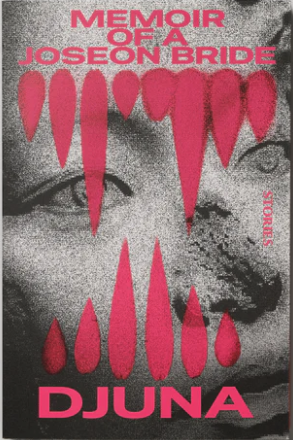
New! Our translation of Djuna’s short story “Where’s Your Dad?” is forthcoming (fall 2026) in the collection Memoir of a Joseon Bride, along with many stories translated by Adrian Thieret, and published by Honford Star. Preorder a copy here.
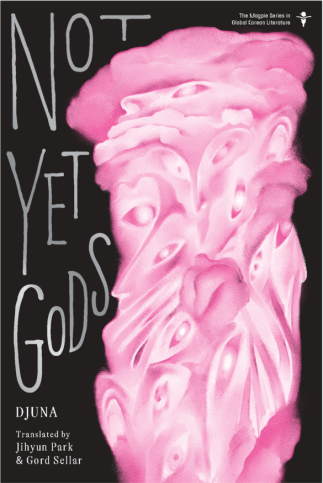
New! South Korean SF author Djuna’s Not Yet Gods in a new English translation by Jihyun Park and me, coming soon (2027?) from Kaya Press. Click here to visit the Kaya webpage for the book and preorder it from the publisher!
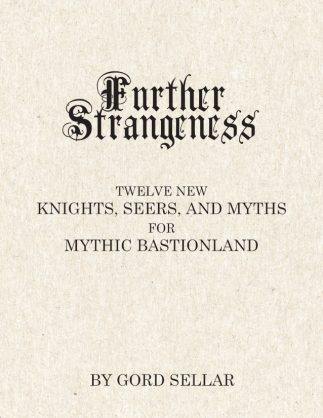
New! Further Strangeness: Twelve New Knights, Seers, and Myths for Mythic Bastionland is an unofficial and unlicensed supplement for Chris McDowall’s wonderful new game, and my entry for the Mythic Bastionland Game Jam. Available for free over on my itch.io webpage.
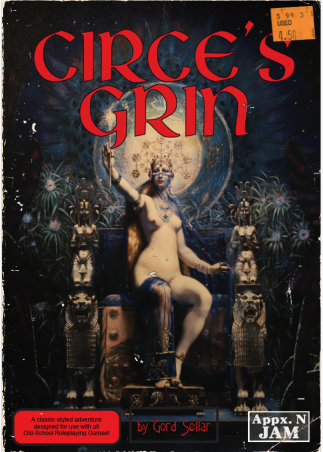
New! Circe’s Grin is a system-agnostic old-school RPG adventure, and my entry for the Appx. N 2025 game jam. Available for free (for now) on my itch.io webpage.
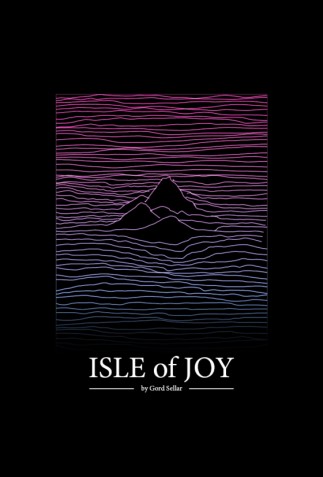
New from Knight Owl Publishing: Isle of Joy is a harrowing old-school adventure on a mysterious island full of secrets and stories. Order a copy on Knight Owl’s website.
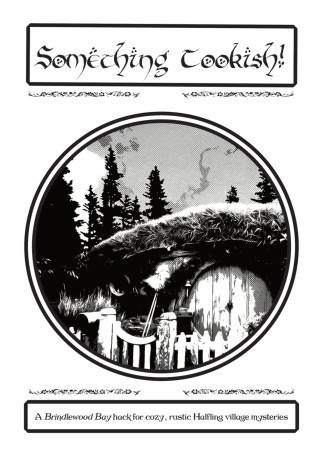
Something Tookish! is a Brindlewood Bay RPG hack for those who want to solve mundane, cozy mysteries in a halfling village. With art by Justin Howe! Get your copy on itch.io!
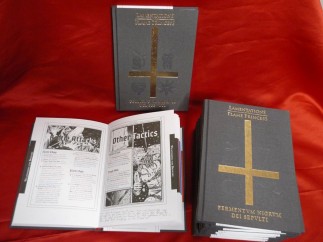
Now available: FERMENTVM NIGRVM DEI SEPVLTI (Black Yeast of the Buried God) from LotFP! Text by me, illustrations by Gonzalo Æneas, layout by Jacob Hurst, editing by Joshua Blackketter, maps by Alex Mayo. OSR adventure set in a brewing abbey in historical Westphalia.
EU Webstore | US Webstore | PDF at DTRPG
My OSR Conversions Guide for the Koryo Hall of Adventures 5E setting book is now available over at DriveThru RPG.
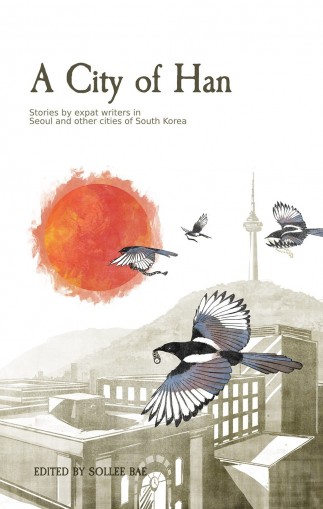
My short story “Sojourn” appeared in A City of Han, available on Amazon.com.
See a complete list of my publications and forthcoming work.
I’ve lost track of who said what, but…
I thought Frankenstein was a lousy book, and I thought this going in all by myself, with little frame of reference even though I was an adult- I had no preconceptions other than high expectations.
I dragged myself all the way through to see if I was missing something or if it would shift somehow.
First, I thought it was just a tedious read. Second, I couldn’t for the life of me see the sense in the sequences of what seemed like passages meant to pass for action.
Mostly, I felt constantly mortified for the writer who created such a morose, maudlin, depressingly downhearted and dismal so-called scientist.
This one wallowed in self-pity, whined about a situation they created all by themselves, and refused to take any responsibility for the deed or their ongoing actions.
In my ever-so-humble opinion.
I think what really kicked it over the edge for me- and, please, tell me if I have this wrong- was when we suddenly find the Doctor and the Monster on a glacier, the latter having gone for a stroll -above Chamounix, of all places- and the latter seeming to have already been hanging around the neighborhood. I have read this over, just now in fact; and I am quite at a loss to uncover any actual plot here.
I have to acknowledge that I am not a sophisticated person, but I believe I am capable of reading, understanding, and discerning crap when I see it.
It pains me to hear this called ‘the first science fiction novel. OK, it depends on a fictional science experiment, but otherwise it’s just Gothic.
I am aware that I am almost alone in this assessment. Almost, but not entirely. I’m sticking with my opinion.
Hi Jimm,
Well, you’re entitled to your opinion, but I think there’s a reason that Frankenstein remains in print almost two centuries after its first publication. I haven’t read it lately, but I have read it a couple of times and thought it was very interesting and well written, and an amazing achievement for a teenaged writer. I also think it’s a pioneering SF novel (it’s being about an experiment gone wrong is at the heart of why it is, but there’s more to it than that), but of course it is also at the same time a gothic novel, and a lot of the things you seem to dislike about it are actually the aspects that make it a gothic novel, including the choice of “terror”-inspiring natural settings and the emphasis on Big Feelings. A work can fit into two genres at once, and as some critics have pointed out, SF is in many ways an outgrowth of the gothic tradition. Where one draws the line depends on the individual, of course: is Hawthorne’s “Rappacini’s Daughter” SF, or gothic, or both? I can see arguments for both sides, though I see it more as a straight gothic tale.
As for Frankenstein’s whining, well: this is a Europe where The Sorrows of Young Werther remained popular at the time of writing, so you might have to blame Goethe. The thing is, Frankenstein was written for a literary audience in a foreign culture, one whose expectations were different than ours are today. The way the text was celebrated at the time should indicate that, for the standards and expectations of its time, it was an excellent work, even if some of those conventions are a bit more alien to us now. Personally, I find it less tedious than a lot of English gothic novels from the generation before it. (Ann Radcliffe bores me in the way Frankenstein bores you, so believe me, I get it.)
But I’m not going to argue about it with you, if for no other reason than I don’t know if you’ll ever even see my response, and what’s more to a blog post from almost two decades ago. I’ll simply assure you that for many readers, myself included, Frankenstein is not “crap.” But I’m not so invested in a stranger’s opinion as to be offended when it differs from my own, or when I believe the stranger is perhaps flamboyantly tilting at the windmills of literary consensus.