- Ezra Poundings – The Reboot
- Blogging Pound’s The Cantos: Canto I
- The Traneumentary, Shooting for Trane, and Pound/Trane in Comparison
- Blogging Pound’s The Cantos: Canto II
- Blogging Pound’s The Cantos: Canto III
- Blogging Pound’s The Cantos: The Ur-Cantos
- Blogging Pound’s The Cantos: Canto IV
- Blogging Pound’s The Cantos: Canto V
- Blogging Pound’s The Cantos: Cantos VI and VII
- Blogging Pound’s The Cantos: Cantos VIII-IX (The Malatesta Cantos, Part 1)
- Blogging Pound’s The Cantos: Cantos X-XI (The Malatesta Cantos, Part 2)
- Blogging Pound’s The Cantos: Cantos XII-XIII (Baldy Bacon and Kung)
- “Ezra Poundings”
- Pound and the Occult: Leon Surette’s The Birth of Modernism: Ezra Pound, T.S. Eliot, W.B. Yeats, and the Occult
- Blogging Pound’s The Cantos: Cantos XIV-XV (“The Hell-Cantos”)
- Blogging Pound’s The Cantos: Canto XVI — Ending “A Draft of XVI Cantos”
- Blogging Pound’s The Cantos: Canto XVII — Toward “A Draft of Cantos 17-27”
- Blogging Pound’s The Cantos: Canto XVIII & XIX
- Poundmania: On Process and Plans
- Blogging Pound’s The Cantos: Canto XX – XXII
- Blogging Pound’s The Cantos: Cantos XXIII – XXIV
- Blogging Pound’s The Cantos: Cantos XXV-XXVI
- A Study From Ontario: Leon Surette’s A Light From Eleusis: A Study of Ezra Pound’s Cantos
- Blogging Pound’s The Cantos: Canto XXVII
- Blogging Pound’s The Cantos: Canto XXVIII-XXX
- Ezra Pound Posts Delayed
- The Mays of Ventadorn by W.S. Merwin
- Blogging Pound’s The Cantos: Canto XXXI-XXXIII
- Blogging Pound’s The Cantos: Cantos XXXIV-XXXVI
- Blogging Pound’s The Cantos: Cantos XXXVII-XXXIX
- Blogging Pound’s The Cantos: Cantos XL-XLI
- Blogging Pound’s The Cantos: Cantos XLII-XLV
- Blogging Pound’s The Cantos: Cantos XLVI-XLVII
- Blogging Pound’s The Cantos: Cantos XLVIII
- Reading the Cantos: A Study of Meaning in Ezra Pound by Noel Stock
- Blogging Pound’s The Cantos: Canto XLIX
- Blogging Pound’s The Cantos: Canto L
- Blogging Pound’s The Cantos: Canto LI
- Blogging Pound’s The Cantos: Canto LII
- Blogging Pound’s The Cantos: Canto LIII
- Blogging Pound’s The Cantos: Canto LIV
- Blogging Pound’s The Cantos: Canto LV (Plus, What Do Ezra Pound, Robert Howard, J.R.R. Tolkien, H.P. Lovecraft, and Sun Ra Have In Common?)
- Blogging Pound’s The Cantos: Canto LVI & LVII
- Blogging Pound’s The Cantos: Canto LIX
- Blogging Pound’s The Cantos: Canto LX
- Blogging Pound’s The Cantos: Canto LXI
- Blogging Pound’s The Cantos: More on Canto LVII, and Canto LVIII
- Blogging Pound’s The Cantos: Canto LXII
- Blogging Pound’s The Cantos: Canto LXIII
- Blogging Pound’s The Cantos: Canto LXV
- Blogging Pound’s The Cantos: Canto LXIV
- Blogging Pound’s The Cantos: Canto LXVI
- Blogging Pound’s The Cantos: Canto LXVII
- Blogging Pound’s The Cantos: Canto LXVIII
- Blogging Pound’s The Cantos: Cantos LXIX and LXX
- Blogging Pound’s The Cantos: Canto LXXI
- Blogging Pound’s The Cantos: Canto LXXVI
- Blogging Pound’s The Cantos: Canto LXXV
- Blogging Pound’s The Cantos: Cantos LXXII and LXXIII (“The Fascist Cantos”)
- Blogging Pound’s The Cantos: Canto LXXIV
 Right, I’m back. This is a series I started years ago. The series sat fallow for some time, but I’m taking it up again for now, for as long as I have time and energy to post and to study these poems. For those who’re new to the series, I recommend starting with the first post, and bearing in mind that I tend to post what I think are slightly atypical readings of Ezra Pound’s book of poems, The Cantos.
There’s also an (updated) index of all the Cantos (and related sources) I’ve discussed so far.
Today’s selection is the first of the celebrated “Pisan Cantos,” Canto LXXIV. It’s a bit astonishing that, after so many years, I’m still only halfway through the text, but I tend to want to read these poems very attentively, and attention was at an extreme premium over the past decade or so.
I should have said this earlier, but this is my first time reading the Pisan Cantos (just as my readings of the Adams and Chinese Cantos were my first time through them), so I’m sort of live-blogging them as I make my way through them one by one. Probably I’ll miss things that would be more apparent in terms of what Pound is up to in the later Pisan Cantos, but as I’ve focused on each poem singularly along the way, I think it’s fine to continue this way. If I set things up so that I need to read all of the Pisan Cantos before posting, I’ll never get around to continuing this series. So, well, bear that in mind when you read my thoughts on these poems.
Canto LXXIV
The first thing that’s striking about Canto LXXIV is its length. The second thing that’s striking is its density. It’s hard not to think of Pound having “recovered” something he’d lost while working on the Adams and Chinese Cantos, though I’m not sure Pound would agree, which is wild considering the conditions under which Pound wrote the Pisan Cantos.
We all know the story, right? Pound, sitting in a cage outside for months on end? I don’t have to recount it here, do I? Because I’d rather you get that from more authoritative sources, and I’d rather dig into the poem itself, because it’s clearly going to keep me busy for a while.
Thinking about Canto LXXIV, I found myself remembering a passage in a book my Canadian poet/author Christopher Dewdney which—and I’m paraphrasing, since I no longer have the book, which I think was The Secular Grail—where he talks about the psychological effect of the end of a long-term romantic relationship. He describes the sense of loss and confusion as being so acute because it amounts to a loss of identity: a breakup leaves one wondering who oneself is, since one’s identity is at any given time is, even in the healthiest person, deeply interwoven with the relationship and the projected future of one’s life in the context of that relationship. When that ends, Dewdney argues, one has difficulty envisioning their identity in the absence of that relationship. (One must, indeed, fashion one’s identity in the wreckage of the no-longer-viable identity.) 1
I think this is also a pretty apt description of Pound’s dilemma, in the detention camp where he was prisoner after the end of World War II. He’d been an ardent support of Mussolini (and European fascism generally), and believed not just that it would triumph, but that he had a place in a Fascist Europe of the future. (Not that I think he actually would have had a place of any prominence in such a Europe, but it’s clear he envisioned one for himself.)
And then European fascism came tumbling down all around him, and with it, the future he’d envisioned for himself, and even the identity he had built for himself as a fascist American in Italy. Canto LXXIV, at least, feels like the beginning of Pound groping in the dark as he tries to relight the lamp of self-perception, as he struggles to figure out who the hell he is in a post-Fascist, post-war European context. Part of that project is also to sort out what the hell European fascism is, if it isn’t the triumphant rhyme of the previous civilizational flowerings that Pound had celebrated in The Cantos. As he embarks on the Pisan Cantos, it’s worth remembering that throughout the “Chinese” Cantos, he’d hammered away at the Confucian idea that corruption in a leader leads to corruption (and ultimately the faltering) of the civilization under that leadership. Who is Pound in post-war Europe also raises the question, who should we see Mussolini as in post-war Europe.
This is a major challenge for Pound, of course: he was all-in on Mussolini and Italian fascism, with a conviction that I’d argue was outright religious in tenor. In the wreckage of the Republic of Salò, captive to those responsible for its defeat—military, ideological, political, cultural—Pound was profoundly adrift: how was he supposed to carry on? (Yes, as cheesy and trite as it is, the Michael Bolton song that’s surely running through both ours minds now is eerily descriptive of the state Pound was in at the time, I think.) 2
Pound being Pound, he decided to hash that out in the Cantos, smashing together his surviving convictions and their echoes from the past with hundreds of literary and cultural references, as well as snippets of his life from before his captivity, and snippets of life from the detention camp in which he found himself. All of this he assembles into what feels like a whirling vortex of references—I mistyped that as “vortext of references” and was tempted to leave it that way, because it really is a vortex of a text.
The opening lines essentially announce the crisis:
The enormous tragedy of the dream in the peasan't bent shoulders
Manes! Manes was tanned and stuffed,
Thus Ben and la Clara a Milano
            by the heels at Milano
That maggots shd / eat the dead bullock
DIGONOS, Δίγονος, but the twice-crucified
                   where in history will you find it?
Benito Mussolini and his mistress Clara Petacci were “killed” twice: once by being shot and killed, and once more by the corpses being being hanged by their heels in public, where they were subjected to abuse and ridicule, so Pound likes them to DIGONOS, that is, Dionysus, who was also apparently killed twice in myth.
The dilemma is profound, though one thing is certain: the dream is over, Pound asserts, invoking Eliot’s closing lines regarding how the world ends, from “The Hollow Men,” which presumably are recognizable to anyone reading The Cantos:
yet say this to the Possum: a bang, not a whimper,
     with a bang, not with a whimper,
The end of what? The end of the dream of Mussolini, but also the dream of Pound: “To build the city of Dioce whose terraces are the colour of stars.” If the writing of the Cantos was an attempt to “build Paradise,” as Pound would eventually claim in one of the last Cantos, then that project—building the city of Dioce— was also deeply imperiled: it had, after all, become a self-consciously fascistic work of literature, and its meanings and place within literature were now in jeopardy after the failing of European fascism. As much as Pound had to figure out who he was going to be, he also had to figure out what his life’s work was going to become, now that Mussolini was not just dead but also disgraced.
Then follows a welter of references, many familiar and some not so much, whirling round and around. Well, of course, they’re just words on a page, but the slipperiness of the references and their tendency to come back again and again gives the impression of a whirling tornado of references.
A line by line analysis would not be interesting or rewarding to read, because this is an incredibly dense and nuanced poem, and certainly it would not be interesting to write, plus it really would be no replacement for going through the poem once for first impressions, then again slowly, with Terrell to one side, grasping the references before rereading it a few times more to refine the original impressions with the implications of all that Pound evokes in those references. A line-by-line analysis could also easily devolve into simply a recitation of Terrell’s glosses, which is no use to anyone.
What I think is more interesting, and perhaps of more use to readers, is to sort of isolate the various referential “clusters” that Pound invokes, because there is a limited number of them, and they each tell us something interesting about what consolations Pound turned to, what echoes of history he chose to align with his predicament and his present imprisonment, and what meanings he was, in this first Pisan canto, trying to build upon the ruins of his hopes. I realize that reading this poem through that lens—asking what consolations Pound seeks in writing it—is a skewed perspective, and that it’s going to lead to a particular interpretation, but I think it’s a valid one, and one that the text itself suggests for the reader. Anyone who sees it differently should feel free to comment, at whatever length, in the comments below.
One place Pound turned for consolation in these lines was to Chinese history, most of them related to Confucius and Confucian ideas. It’s easy to see why this might have been a consolatory theme for Pound: much of his life, Confucius was rather a failure at what he set out to do, traveling from one kingdom to another and mostly angering the rulers with his philosophizing before being unceremoniously sent packing. And yet Confucius’ ideas did eventually come to prominence and, to some degree, played a role in defining Chinese culture and politics. Ideas can triumph in the long run, even if not in the lifetime of their prophets.
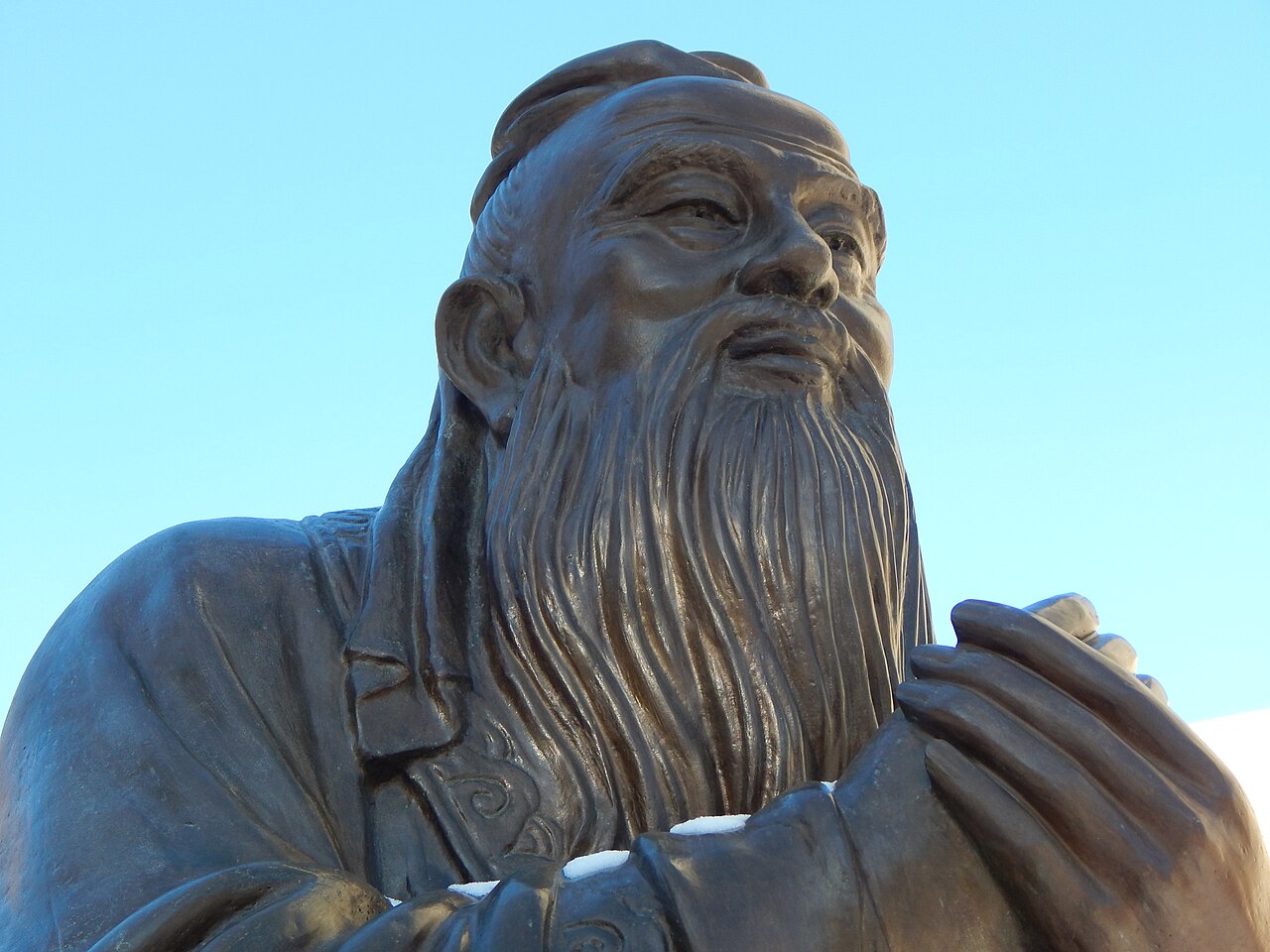
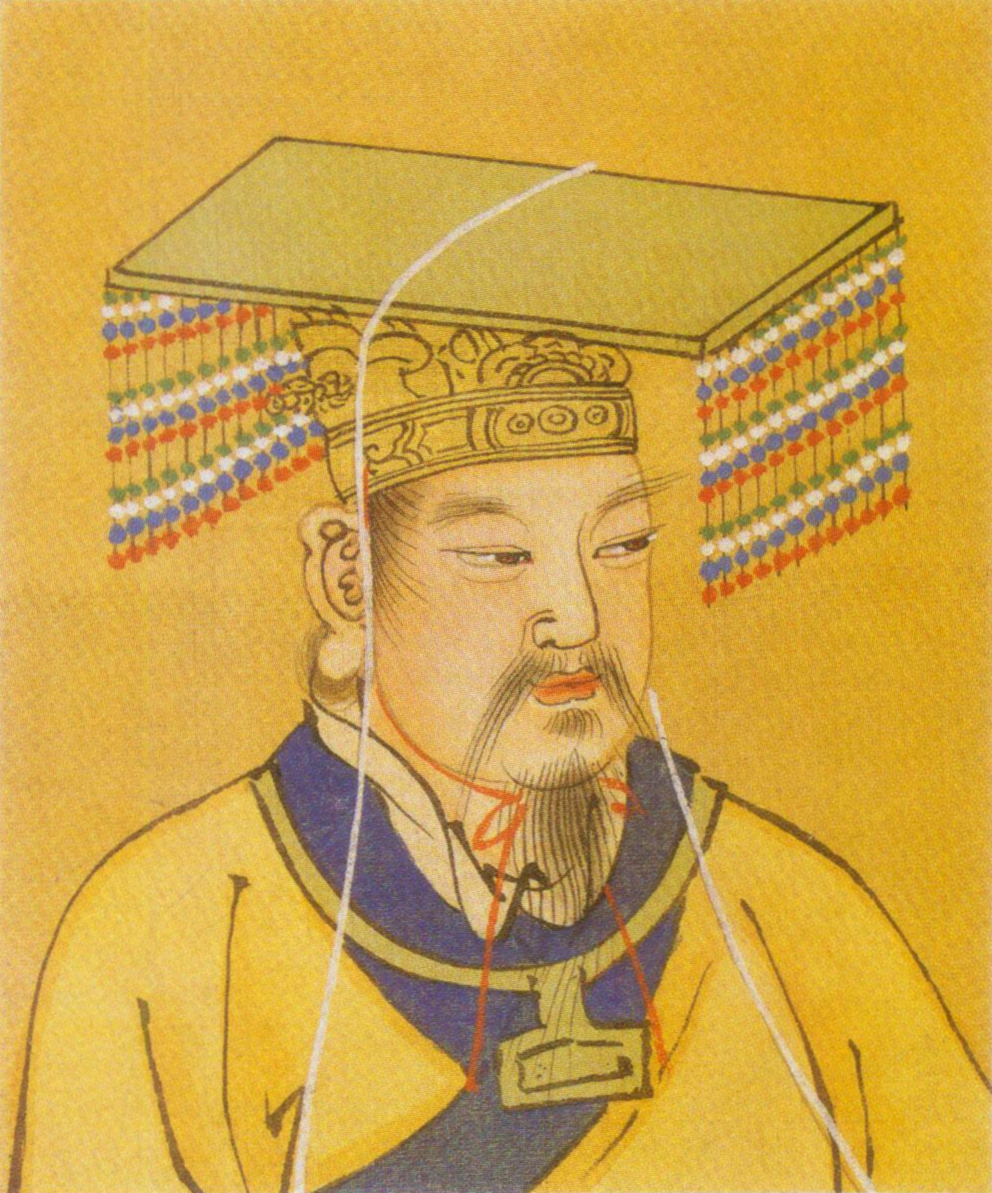
In addition to Confucius, there are references to the first emperors, and to Taoism. As for the first emperors, I suppose that Pound is consciously aligning his poem with the project that they arguably began: cultivating civilization (the foundations of “Paradiso terrestre”). The Taoist references are mostly to “the process,” and how rains and winds are also “of the process”. These meld with references to the winds later on in the poem, where Pound invokes (using Latin, I believe) references to the winds that blow on the Mediterranean. Doubtless Pound was acutely aware of weather while in the detention camp, sensitized to the wind and the rain that fell all around him, but there’s also a deeply consolatory undetone to the repeated references to “the process”—something that at once is outside of Pound himself, but also something bigger than any one of us, bigger than any historical moment.
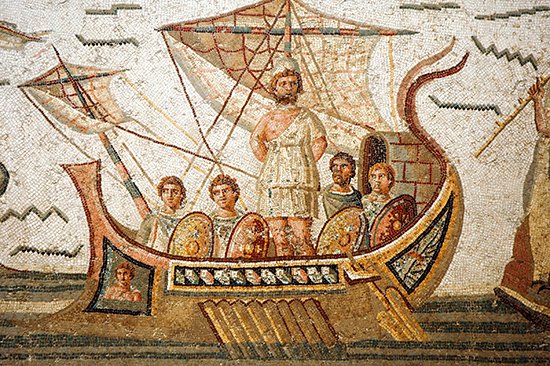
Next, there are a few references to the familiar figure of Odysseus, a figure who’s long been a touchstone for the Cantos. Many, many posts ago I detailed how I think the nekuia in Canto I is kind of a metaphor for the kind of “translation” that Pound undertakes in the Cantos, and there are references to the nekuia here, including some of the people (like Tiresias) that Odysseus saw in Hades. But it’s also worth remembering that Odysseus, though one of the victors in the Trojan War, ended up being imprisoned more than once during his wandering attempt to return home, and when he did return home, bedraggled, alone, he found the kingdom of Ithaca and his very family beset by greedy, malicious men. It’s not difficult to imagine Pound feeling a kind of kinship with Odysseus, beset at all sides, having lost all his allies, struggling to find his way.
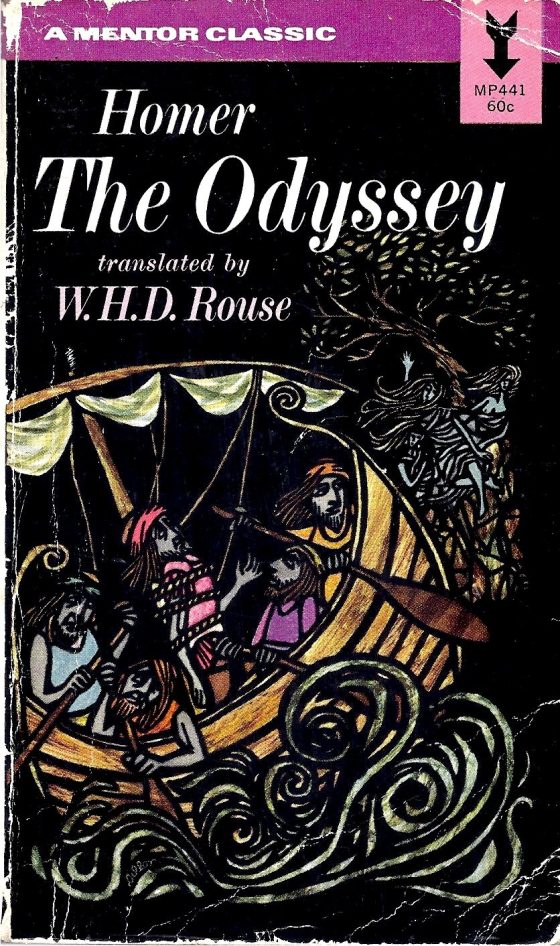
(Especially interesting was the bit on page 446 of my copy, where there’s a reference to how “Rouse found they spoke of Elias / in telling the tales of Odysseus. Pound was commenting on William Henry Rouse’s translation of The Odyssey, and to the claim that when Rouse visited Greece, he encountered people telling stories about the prophet Elias, except they were actually tales of Odysseus. There’s something appealing to Pound’s taste for occulted knowledge here, but also something about the enduring power of great literature and Odyssean cleverness.)
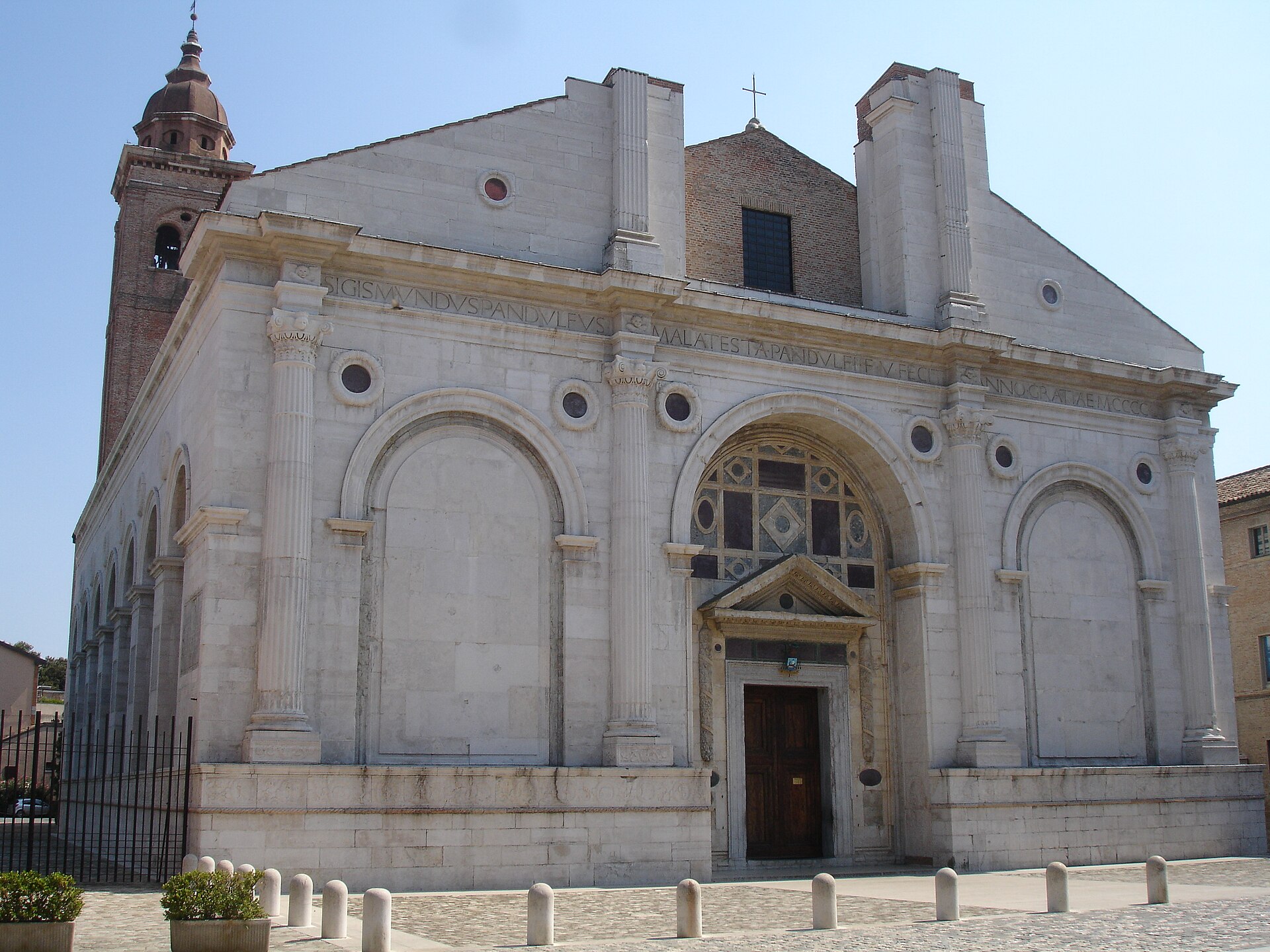
Another recurring reference is to Malatesta—or rather, the the artists in Malatesta’s employ, and artists in Italy more generally, which I think also invokes the enduring power of great art.. I suppose here Pound is attempting to align himself with them, as an artist in his own right, but is also pointing to “the process”: that the present moment is really just a step along the way. Old art is one way of invoking that history is much bigger than a single historical moment, but I think also, there’s something deeply consoling for Pound in seeing The Cantos as part of the same cultural and historical project that Malatesta funded, and that the artists in his employ worked on. The renaissance could continue through the fat times and the lean times alike, as long as people continued to commit to a re-nascence, that is, to constantly rebirthing it and in so doing what Pound liked to demand: “make it new.” Another (renaissance) painting that Pound refers to multiple times in the poem is this Botticelli’s The Birth of Venus:
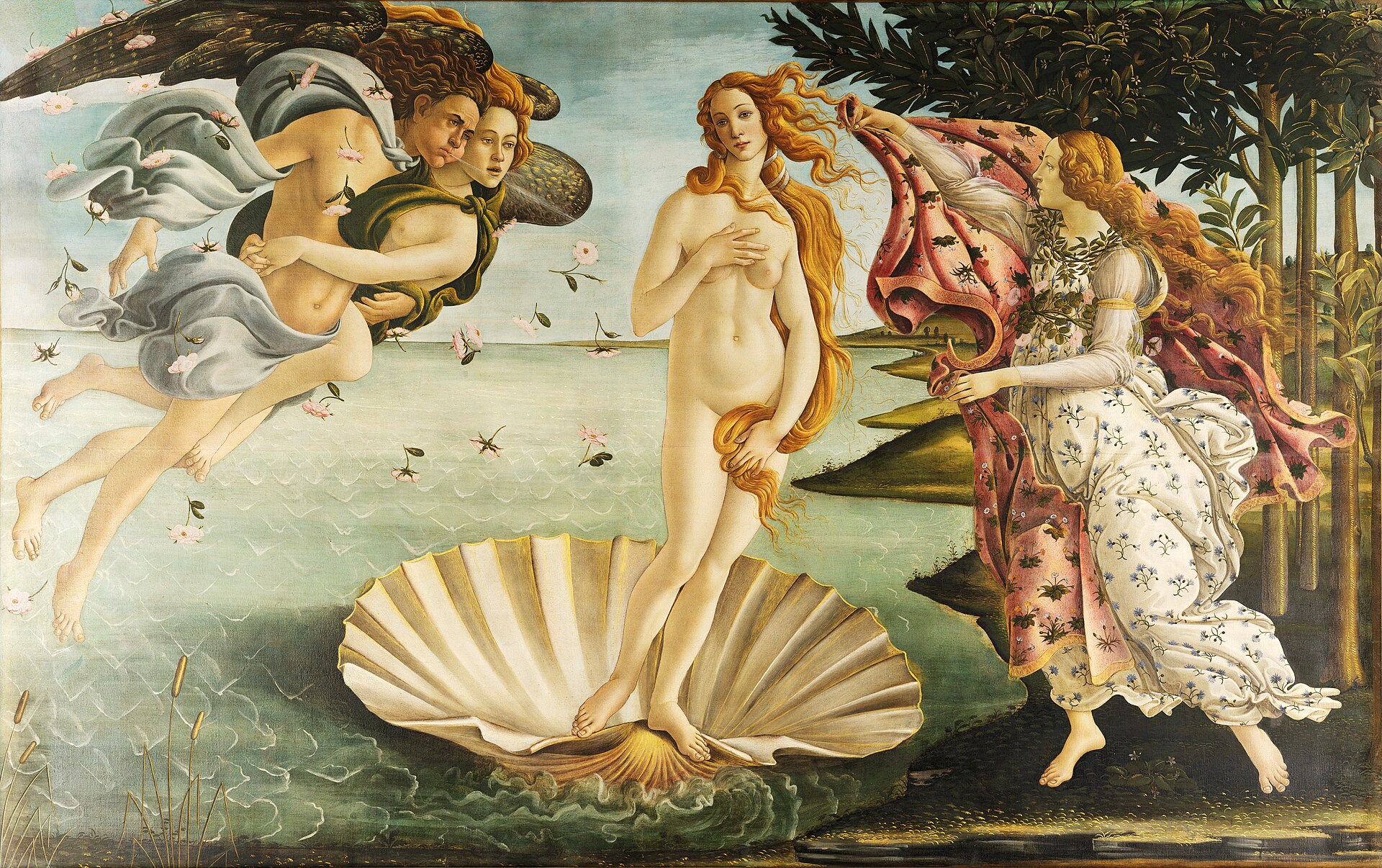
… and it’s tantalizing to imagine him remembering the painting, the vague impression of it hanging in his mind, haunting him as he sat in the detention camp, unable to go and see it again. The invocation of the divine, much like his constant invocations of classical divinities in The Cantos, but also the presence of Zephyr blowing wind upon Venus, and the descending flowers, the waves upon the sea. Did the painting come to life in Pound’s imagination, the wind blowing Venus’ hair and causing rustling among the branches of the orange trees to the right? We can’t know, but one gets the sense that his imagination reached out to such art, especially when his keepers were forbidden from speaking with him in the detention camp.
Beyond that, it’s also worth mentioning that Venus is only one of a few feminine figures, often but not always divine, who come up throughout the poem. There are repeated references to the familiar figure of Cunizza da Romano, lover of the troubadour Sordello, and specifically to her describing herself as “the moon.” Kuanon (the Chinese goddess of mercy, usually spelled Guanyin today) is also a recurring figure, and several churches dedicated to the Virgin Mary are also mentioned, as are the Sirens and the Graces and the Muses (specifically Clio and Terpsichore, muses of history and dance specifically). Olga Rudge, too, gets a brief mention, if Terrell’s gloss is correct:
     she did her hair in small ringlets, à la 1880 it might have been,
red, and the dress she wore Drecol or Lanvin
          a great goddess, Aeneas knew her forthwith
(That last line could be seen as following a pause, but I rather think including it imparts something from this Canto, the way that Pound slips from one reference to another, eliding them: “a great goddess” could be his mistress Olga, or she could be the goddess Aeneas recognized immediately despite her being in human form (which was his mother Aphrodite, once again making an appearance in the poem). It’s kind of a sweet moment, when he elides Olga with Aphrodite, if you sort of look past the fact that Olga was mistress, and that his wife seems to merit no mention in this poem.
Reaching beyond the artists working for Malatesta, and some more recent to Pound’s time like Manet, Pound also points to other imprisoned artists, such and Basil Bunting and e.e. cummings. One suspects that Bunting and Cummings—imprisoned for conscientious objection, not treason—would have had disapproved of Pound’s implying they were in similar circumstances, but it’s easy to see Pound finding their situations comparable.
Another cluster of references collects around monetary theory, which is hardly a shocker at this point in the Cantos. Well, not just monetary theory but also Pound’s antisemitic hangups when it came to monetary theory. Pound very notably recedes into rant mode here, never pausing to even in passing reconcile the fact that the Allies with their apparently terrible monetary system, somehow managed to crush European fascism at enormous financial expense. I think there, the consolation is the familiar sense of being a prophet out in the wilderness, speaking truth and not being heard. (Which is ironic, given that the image comes from the Jewish tradition, but here is deployed by an antisemite, amid aspersions cast upon the founder of the Rothschild family and complaints of usury…)
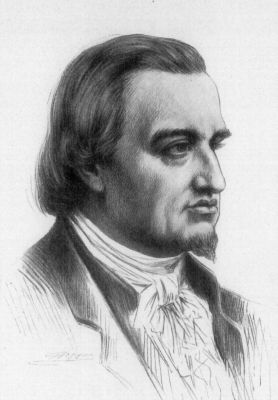
Frobenius starts to make a more prominent appearance in the Cantos here, too. I’m not so familiar with the role of Frobenius to Pound’s thinking, though I know it was a major influence. I’ll have to dig into it more. It’s through Frobenius that we get the references to the legend of Gassir’s lute, a tale collected by Frobenius in modern-day Ghana. It’s not hard to see why this story would appeal to Pound: a king who foresakes his throne to become a diari (a sort of bard-like figure, like a griot) is obviously the kind of figure Pound felt resonated with his own project, and his own life trajectory.
Neoplatonic light imagery returns to prominence in the poem, too. Pound’s use of Chinese characters, for example, tends to be focused on this concept of light such as in the following character:
顯
… which is glossed by Terrel as “Hsien,” and which supposedly means “display, be illustrious,” though Pound includes it alongside the following phrase:
in the light of light is the virtù
                  "sunt lumina" said Erigena Scotus
Old Scotus is of course a Neoplatonist to anyone who’s made it this far into the Cantos, of course:
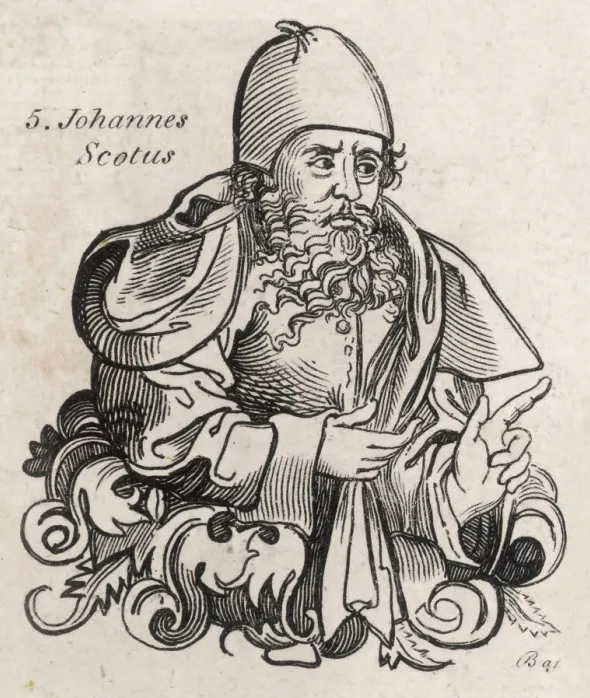
There are several references to light filtering down, and he hammers away at the phrase “sunt lumina” (“it is light”), all neoplatonic business, of course, but I also think of how Pound’s relationship with light seems a little changed in this poem. When he describes light, and the blowing of the winds, and the presence of insects and birds, I’m struck by the fact that he’s suddenly much more attentive to the nature around him, to the natural forces that are acting upon him as a person, as a poet, and, of course, as a prisoner. He seems at once to be attentive to other natural forces around him—the “rose in the steel dust” being a reference to magnetism—and that he sees them as analogous to the natural forces of history, the Taoist “process” that he repeatedly invokes.
There are occult references beyond this, too: Pound mentions G.R.S. Mead, for one, and even, in a very surprising turn, mentions the Fortean society. (Yes, Fortean as in Charles Fort, the legendary writer about the weird and inexplicable.) Metempsychosis (reincarnation) comes up in the poem, too. All of this, I think, fits quite well into a reading of the poem as a kind of occult historiographic text, a text that purports to be about the truth regarding hidden and unrecognized patterns in history. There is also a very striking description of a fakir doing tricks in the street, which Pound apparently saw in Tangier, Morocco.
Speaking of Chinese characters, it’s worth pausing to note that the only other Chinese character in this poem is this one:
莫3
It is pronounced mò and signifies negation, like the “not” in “do not” or “cannot.” For a moment I thought it might be the same character as the Korean 무, which is an important word in Buddhist thought, but it turns out that’s a different character, though maybe they’re homophones. Anyway, in this case the character is apparently meant to reinforce the Greek ΟΎ ΤΙΣ, the pseudonym that clever Odysseus originally gave the blinded Cyclops, meaning “nobody.”) One imagines Pound would have loved this character, since it contains the radical 大 (“dai”, meaning great), which itself is built by adding a stroke to the Chinese character 人 (“ren”, meaning person). In other words, Pound chooses a character signifying negation, but which contains characters for the words “great” and “man,” sort of “hidden” within it. The etymology is probably nonsensical to a fluent Chinese speaker and reader, but to Pound this would have been a delightful choice for invoking Odysseus’ presence in the poem.
Back to the image/concept-clusters present in the poem: France is referred to many times, particular places like Ventadour, and there’s even a line quoted from a song by Bernart da Ventadour. (When I read the line, I was quite excited because I actually recognized it without looking it up. Can vei la lauzeta mover is one of the troubadour songs I learned about in undergrad, and I actually memorized the first verse in Occitan… it still sometimes goes through my mind. I think in that particular reference, Pound is sort of finding new meaning in the line—Che sublia es laissa cader—in his newfound outdoor surroundings, where doubtless larks could be heard singing often. Again, this probably is Pound finding new significance the natural imagery in the troubadour verse he so loved, but in the light of his imperiled project, I feel like he’s also invoking the troubadours like (as ever) to situate his own work within the “great tradition” of poetry as he sees it—the tradition he outlined in 1938 in his Guide to Kulchur. For those who don’t know the song by Bernart, it survives and it’s lovely:
Alongside the reference to Ventadorn, there are references to many other writers besides cummings and Bunting, and Eliot in that reference early on, as well as Henry James. He mentions Joyce and Yeats and Hemingway, and refers in passing to a poem by Ben Jonson. Dante, as always, comes up multiple times as well, and Sophocles’ Oedipus Rex is mentioned in passing too. Also somewhat new is Pound’s invocation of Noh plays, which he does a few times, sometimes hinting at echoes or rhymes between Japanese characters and characters from other other traditions.
These are the people around him who get inscribed into the poem, including fellow prisoners and also trainees and personnel at the detention camp. These moments always stopped me short, while reading: the references to other inmates were eerie, and the references to soldiers—especially those who extended Pound a kindness—were always quite striking. Vivid snippets, these small moments, with a similar effect to those moments when Pound includes an image or sound from the camp, like the katydid that is “minus its right propeller” (wing)—a figure one suspects Pound could relate to at the moment. There’s even a snippet of song recognizable to at least some modern readers, Gershwin’s “O Lady Be Good,” though the version most of us would recognize is the later (1947) Ella Fitzgerald version, which came out a few years later:
That said, it’s one of the few references to a jazz standard in the Cantos, and even earlier versions were mostly recorded in a swing style—and I’d rather share an Ella version than a Paul Whiteman one.
The most surprising prisoner to be mentioned among all of those in the camp is “Till”—Louis Till, who “was hung yesterday / for murder and rape with trimmings.” Louis Till, who was hanged in the camp where Pound was kept, Terrell tells us, was in fact the father of poor Emmet Till, a much more famous and tragic figure in American history, as probably the most famously-remembered victim of a lynching that took place just a little more than a decade after his estranged father’s hanging. It’s pure coincidence, of course: details of Till’s execution weren’t made public until after EmmetTill’s murderer’s acquittal. The Terrell Companion has a, er, problematic habit of describing white people at the “DTC” as “trainees” or “inmates” but Black people there as “Black trainees,” in other words only specifying race only when they’re Black. That said, there’s a degree to which Pound consciously conveys their Blackness in his poem, using rendered dialect for example to suggest it.
Another Black man who is mentioned was nowhere near the camp: “black Jim,” was was an employee at the Hotel Easton, a rooming house run by some relatives of Pound’s in New York (at the site where the Ritz Carlton would later be built). A number of characters from the rooming house are mentioned, for reasons that remain a little obscure when considered on their own: Quackenbush (an architect), and Mrs. Chittenden (a musician and transient resident) don’t seem so important on their own. But other figures—mostly colourful ones—are also mentioned, people mostly known to Pound from his time in Europe. Beyond their significance situating Pound in the expatriate world of interregnum Europe, I’m not quite sure how they connect to what’s going on in the poem, though sometimes there are tenuous links, such as to Stalin and Lenin, who are mentioned by figures in passing in ways that link them to Pound’s frustration that his economic ideas were not implemented (or even taken seriously). But given the context in which the poem was composed, Pound a prisoner surrounded by people forbidden to talk to him, it feels like he’s turning back in his mind to conversations and interactions of the past, the consolations of past quirky people and the amusement they offered.
Urban settings also feature prominently in the poem, ranging from Ecbatan to references to restaurants and cafés in Paris and Vienna, Verona, Trastevere (the district in Rome) and Carrara and of course the references to New York mentioned above. These urban settings feel like they’re invoked in contrast with the nature-imagery that suffuses the poem, and the fact that they’re all in the past, memories of places for Pound-the-outdoor-prisoner, lends them a kind of bittersweetness. They contrast with his current state, “in Circe’s pigsty,” (an image he invokes more than once), though of course there’s also a sense in which he’s in Circe’s pigsty professionally, that The Cantos (his life’s work) are imperiled by the tides of political change and war’s conclusion in Europe, as I mentioned earlier. The death-imagery of the end, when Pound writes, “we who have passed over Lethe,” drives home this sense of peril, of doom and loss. But there are also references to ancient cities here and there, often in conjunction with Paradisical imagery, just enough to kind of bring to mind the contrast with Pound’s very human predicament, now finding solace in “a smell of mint under the tent flaps / especially after the rain” or how “Les Paradis,” albeit broken, “exists only in fragments unexpected excellent sausage, / the smell of mint, for example, / Ladro the night cat;” and it is in these fragments that he must find solace, as “a man on whom the sun has gone down”. Little wonder he insisted, “nor shall the diamond die in the avalanche.” The diamond was the Cantos, was himself too, probably, sitting in the ruins of his life and his life’s work. While I find it hard to sympathize with his absurd convictions, the way he describes his predicament is nonetheless oddly powerful.
Finally, mountain imagery is important in this poem. There are recurring mentions of Taishan, the sacred Chinese mountain. Pound was, of course, in view of a far different mountain at the detention camp at Pisa, but in the poem he elides it with Taishan repeatedly, also conflating other mountains with it, such as Mt. Fuji (“Fujiyama at Gardone”, specifically, with Gardone having been Mussolini’s capital of the Republic Salò). Mountains are clearly sacred in this poem, and represent a kind of collapsing of space, almost a typological collapsing of space indeed. Pound’s work could be said to be typological at base, after all, but it is particularly so now, when he cannot move: since he cannot go to Taishan, he imagines Taishan being everywhere a mountain exists instead.
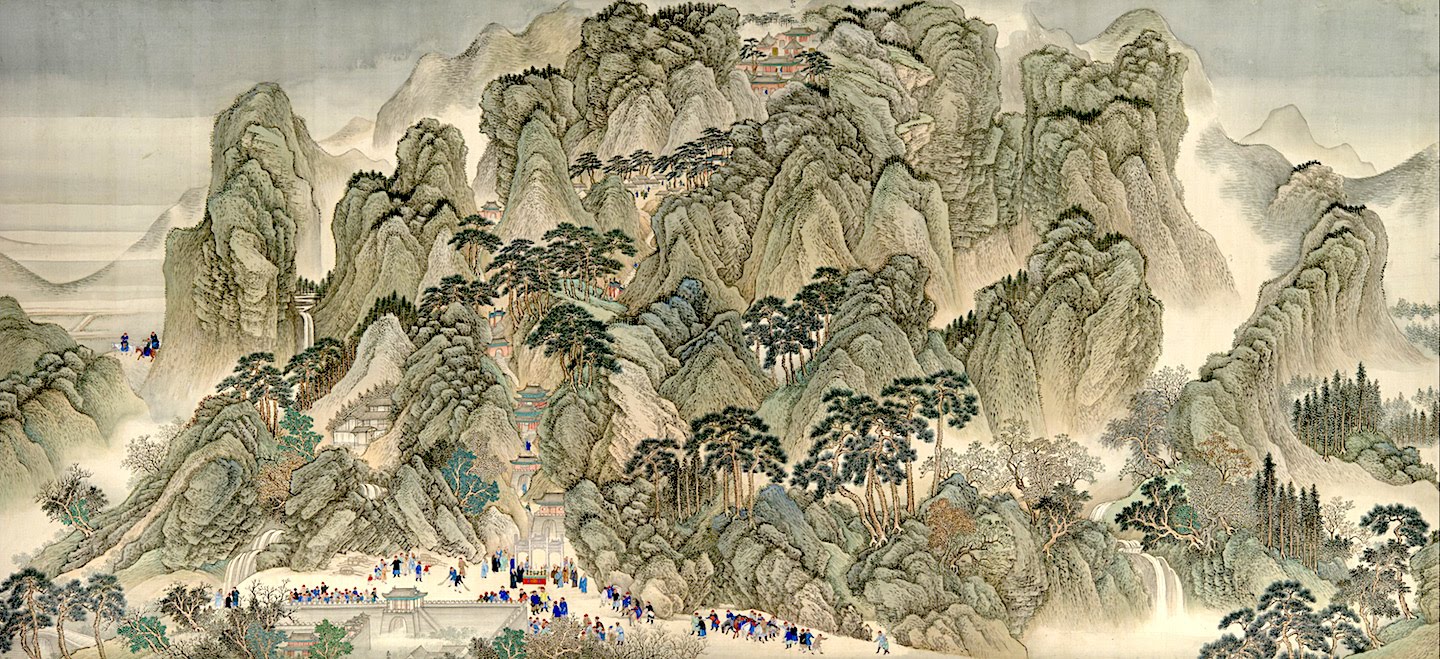
Those, I think, are the main clusters of imagery and ideas that swirl about in this Canto. They don’t completely come together into a single picture with any great clarity, but then, I suspect this canto is sort of the opening gambit, like the opening movement of a symphony where themes and forces are being announced which will be explored more deeply in what follows. But it’s nonetheless worth noting just how furiously the vortex spins in this poem: it’s twenty-five (?) pages of images spinning past, soaring on powerful winds, some lifting off and flying away out of sight and others returning into view time and again, all of it whirling by so quickly that it begins to melt and fold together. Even the moments of quiet tranquility often give way to a torrent of images, or a shift in tone, within just a few lines.
What I will say is that the canto definitely represents what I see as a return to form. Reading it, and reflecting on the fact Pound was working without his library at hand, it is apparent that as poetry it works a hell of a lot better than the Chinese Cantos or the Adams Cantos. Pound is stretching here in ways he hasn’t for some time, using muscles I think he’d not used in a while, and I’m quite surprised at the lack of atrophy. The poem is challenging, and I’m sure that one can make more sense of it the more one returns to it—especially after reading the other Pisan Cantos—but even now, I can say that it has in it that which drew me to the Cantos in the first place, and which in large part I found missing in the Adams and Chinese Cantos. It’s good to be back in this difficult, unfamiliar, but rewarding territory. One might even argue that, as traumatic as his imprisonment was, it also did wonders for his writing, by removing from his life any number of distractions. I don’t know that he’d agree with that, but the thought did occur to me. Perhaps, to riff on Virginia Woolf’s line, what Pound needed more than anything was a cage of one’s own?
I’ll note that I’m no longer really thinking about writing Pound as a fictional character, though if I were, I would definitely be writing this Pound, the Pound in the detention camp, somewhere in the book. It’s a powerful and striking image, and one that jarringly contrasts with Pound’s previous life.
As for this series, I’ll do my best to post about the rest of the Cantos as I can get it done. My work schedule is a bit absurd, but reading The Cantos will give me something constructive to do at my desk at work between classes, and I’ll be trying to get a new post up once every couple of weeks. There are a couple of books I don’t have access to that I’d like to have on hand, but I’ll make do without them until such time as I can pick them up.
I wish I had the book, so I could quote it here, since Dewdney is more eloquent in his statement of the idea, but no longer have my copy of it. ↩
And I really, really dislike like Michael Bolton’s music, like almost as much as I despise Kenny G’s music. This is one of my favorite videos on the internet for a reason.↩
The traditional Chinese font is displaying the character a little differently from how it appears in the Cantos. This plainer font looks more like what Pound used: 莫.↩
Am really pleased to see you have come back to the Cantos – given you bravely managed each of the China/Adams Cantos you deserve to do the Pisans…
Thanks, I appreciate that! Looking forward to digging into the Pisan Cantos further.