- Coming Soon: Mythic Bastionland!
- Our Mythic Bastionland, Session 1
- Our Mythic Bastionland, Session 2
- Our Mythic Bastionland, Session 3
- Our Mythic Bastionland, Session 4
- Our Mythic Bastionland, Session 5
- Our Mythic Bastionland, Session 6
- Our Mythic Bastionland, Session 7
- Our Mythic Bastionland, Session 8
- Our Mythic Bastionland, Session 9
- Our Mythic Bastionland, Session 10
- Our Mythic Bastionland, Session 11
- Our Mythic Bastionland, Session 12
- Our Mythic Bastionland, Session 13
- Our Mythic Bastionland, Session 14
- Our Mythic Bastionland, Session 15
- Our Mythic Bastionland, Session 16
- Our Mythic Bastionland, Session 17
- Our Mythic Bastionland, Session 18
- Our Mythic Bastionland, Session 19
- Our Mythic Bastionland, Session 20
- Our Mythic Bastionland, Session 21
- Our Mythic Bastionland, Between Sessions 21 and 22: The Feast
- Our Mythic Bastionland, Session 22 and Epilogue
- Our Mythic Bastionland Wrap-Up: Behind the Scenes
Here’s the play report for our twenty-second (and, for this campaign, final, or at least final-for-now) session of Mythic Bastionland, which we played this past Sunday night. If you’re just joining us, I’d recommend starting at the first session and reading forward from there. It’s all organized in a series, so it should be easy to find the posts that follow the first.
This was a climactic final session, and I’m going to try do it justice below, as I’m writing this over the following couple of days. A lot happened (this is the longest post I’ve done so far in this series, though the follow-up post for the campaign will be longer). Anyway, hopefully I remember it all, or at least everything noteworthy. Dear players, if I missed anything, let me know!
We started the session by addressing the questions I left at the end of the previous post, the feast-post:
Sir Yorick was asked: You got a chance to speak with the minstrel, Yerkin, who authored “The Three Foul Knights”. What did you say to him, or do to him?
Yorick’s player wrote a detailed response, which I’ll share here, since he mostly read it to us:
Upon hearing about the missing Sir Valamonte, the Halo Knight. Childermass will describe the dead knight he, Augustine, and Lyssa found on horseback in the wood near Belfin Town. He will say that he and his companions showed the knight honor and buried him some distance from Belfin. Childermass is respectful in his speech regarding the dead knight.
And about Yerkin…
… so Childermass will attempt to remain unobserved by Yerkin while getting close to him and hoping to catch him away from anyone. When the two are relatively alone, he will approach Yerkin in a friendly, if sinister manner, complimenting the bard on his wit. He will ask after the Lady Eloesa and be curious if she is in the town.

Yerkin had no idea where Eloesa was, having taken off from the group of pilgrims as soon as Eloesa’s interest swung Sir Yorick’s way. Indeed, he seemed somewhat surprised that Eloesa wasn’t still with Sir Yorick.
Childermass will claim that he cares little for his own reputation as he may achieve some great deed while he yet lives, but, and here Childermass will look grave and serious, Augustine and Lyssa having died will have no chance to improve their reputations. He will share the tales of their deaths with Yerkin, coloring it accordingly to give each poetic, if tragic drama, and adding details he left out of his other tellings. Childermass will want Yerkin to make songs of remembrance for each, hailing them as great knights.
He will then once more compliment Yerkin, ask after Eloesa, and imply that if Yerkin does a bad job Childermass might do him an injury. But if Yerkin does well, Childermass says Yerkin may find himself rewarded.
One other question that came up was who Yerkin seemed to be hyping up. The answer was that Yerkin seemed mostly to be praising the enormous and powerful Sir Gowere, though Sir Yorick had the impression this was less in the role of hired hype-man and more just because Yerkin picked the most obviously imposing knight present to praise.
As for Sir Yorick’s relative friendliness, Yerkin’s reaction was of distrust and fear. He admitted that it was somewhat unfair to besmirch the memory of knights who could not better their reputations, but also seemed unable to shake the idea that Sir Yorick was somehow messing with him. He hightailed it out of the hall at the first opportunity, leaving the feast without music.
Sir Leif was asked: Sir Burgoyne made a point of sitting with you and asking you about King Aeldrin, Lady Ygraine, and Hegravayne. You got the sense he was feeling you out, but you’re not sure why or what for. What kind of impression did you try to make on him?
Sir Leif’s seeemed to get the idea that Sir Burgoyne was hitting on him, though that didn’t go anywhere. Sir Leif was friendly and receptive, but disappointed when Sir Burgoyne kept everything professional. Unfortunately, Sir Leif didn’t have a lot of answers for Sir Burgoyne’s questions, since he’d never met King Aeldrin or Lady Ygraine, and he had no good things to say about Hegravayne. Ultimately, Sir Leif did not get lucky, but Sir Burgoyne did offer to take him hunting sometime.
Sir Tyack was asked: Toward the end of the feast, you spotted a servant with an oddly familiar look about him:

How did you respond to this surprise?
Sir Tyack kept his cool, approached the doppelganger of his past appearance—who was a member of the castle’s serving staff, not a member of any Knight’s retinue—and had the servant-doppelganger fill his wine flagon. The servant didn’t seem particularly disturbed by Sir Tyack’s current resemblance to him, nor did he seem to be “in” on it. Perhaps he didn’t even really register the resemblance? Sir Tyack kept an eye on him through the rest of the night, but saw nothing curious or untoward in his behaviour.
The feast was celebrated, and ended merrily.
The next couple of weeks went by in a flash, with hunting and feasting and various friendly trips into the countryside around Castle Blackwort, and of course a visit to the local graveyard by Sir Yorick. The local knights extended hospitality to our trio of Knights, and as a result the Knights got to know the countryside around Castle Blackwort a bit better, which prompted this reveal of another chunk of the hexmap:

For those who are interested, they got a little information to go with the map revelation:
0605: Blackwort Castle
0503: The Stink, a mucky, nasty wetland peopled by mudlarks—people digging in the mud for lost treasures and objects from the past
0505: A nasty bit of country, with the ground hot and smoke pouring from cracks in the earth; supposedly a mine full of gases had caught on fire and been burning for years at this point.
0704: A blighted wood, cursedly confusing and difficult to navigate.
0506, 0606, 0707: farmland
0607: Winterlake, with Winter Isle at its center
Then we cut to the tournament:

When the Knights arrived at the tourney grounds, within the fortified walls of Blackwort City, they discovered in attendance not only all of the knights from the feast, but some other new faces. One was familiar: Sir Garmen, the Scab Knight, visiting from Caerwyn Keep:
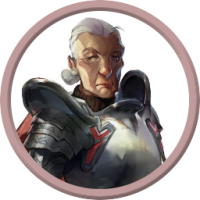
 But there were a few unfamiliar faces as well: Ser Gabrin, the Dream Knight, a tough-looking older woman who apparently was the ruler of Port Mullen, on the north coast of the realm:
… and Ser Dorka the Violet Knight:

… along side her young protegé and sidekick Sir Beyran, the Dusk Knight:

Finally, there was one knight whom none of the others had ever seen before, and one who stood out by his curious appearance: not just his pointed ears, but the image of Mavrydd painted onto his faewood shield. He was Gerardin, the Knight of the Road:

All the courtiers were in attendance, along with much of the population of Blackwort City. Sir Yorick went out of his way to be courteous, bowing to Queen Borran:

… and her advisors, and to the audience, and to his “ward/wife” Karola:

The first day of the tourney consisted of a series of duels, mostly arranged by one knight challenging another on the spur of the moment. The first match of the tournament began after Sir Gerardin:
… approached Sir Yorick:

… with a strange, unwholesome smile on his face and challenged him to a duel. Both knights fought well, and during the fight Sir Gerardin taunted Sir Yorick, letting it be known that he had been sent on purpose to learn more about Sir Yorick’s strengths and weaknesses. However, Sir Yorick was victorious, leaving Sir Gerardin with a nasty slash on one cheek that somehow did not wipe the smug and strange smile from his place.
As other knights paired off and battled—Sir Gowere the Whip Knight besting Sir Brayne the Mock Knight:


… and Sir Ezterre The Questing Knight closely defeating Sir Burgoyne, the Willow Knight (and cousin to Borran Gladsmere):


… though the almost completely unarmoured Sir Burgoyne showed off incredible nimbleness, moving quite a lot and proving very difficult to hit.
Sir Tyack:

… eyed the remaining knights who had fought in no match yet, and found himself attracted (ahem) to the idea of fighting Ser Reyka, the Fanged Knight:

… and as they took to the field, the audience howled with laughter, in on some joke to which Sir Tyack was not privy. Ser Reyka loudly challenged him to unarmed and unarmoured combat, which puzzled Sir Tyack, but he shrugged and agreed to the terms. Not much longer later, he found himself being lowered to the ground, wounded badly by a bite mark on his sword arm, which the bite had rendered useless, and falling asleep—a magical effect of Ser Reyka’s bite. He was declared the loser of the fight, but consoled by the other knights, who had guessed how the fight might go and been amused by his cluelessness.
Next Sir Beyran The Dusk Knight and Sir Wodwale the Ghoul Knight:

… clashed, with the latter unsurprisingly emerging victorious. Then Sir Garmen, the Scab Knight, challenged Ser Dorka, the Violet Knight:
… and the Scab Knight won the fight.
Then Sir Leif: 
… could wait no more, and decided to challenge the apparently poorly-armoured Myghal (the Rat Knight):
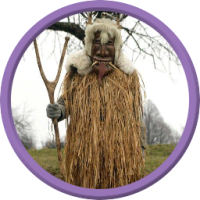
… to a duel. Again, taking to the field, the crowd burst into laughter, which Sir Leif resented. He fought bravely with his fang blades, as Myghal ran about the battlefield, avoiding blows and trying to grab the war darts he’d sunk into the ground, but within a few clashes, Sir Leif was the victor. That said, one war dart did dig into Sir Leif, almost killing him: he was aware of how close he came to death, and a sense of doom—of his evaded death waiting nearby, ever ready to claim him—came over him.
Next, Ser Ogan (the Gallows Knight) challenged Ser Gabrin, the Dream Knight:

and the former lost to the latter.
With each knight having participated in one duel, the day was nearly done, but Sir Yorick decided with unflagging courtesy and respect to challenge Garmen (the Scab Knight) to a friendly duel, an invitation that the Scab Knight accepted in the spirit it was given. After a brief clash, Sir Yorick was the winner, helping the Scab Knight back to his feet and, arm round his shoulder, helping him off the battlefield. After this battle, he spied Sir Gerardin, the fae knight, and noticed that the scar was gone from his face, and the eerie smile still there. Sir Gerardin nodded a greeting to him, but left the tourney grounds, not to be seen again.
With that, the first day of the tourney ended, with the expectation that the second day of the three-day tourney would bring jousts. All of the knights in attendance went to the bathing house, to enjoy the healing effects of the waters there—before adjourning to feasting hall in the castle. Then followed a near-endless series of highly courteous toasts and speeches ensued. All present partook of the fine wine that was brought out, but after a few hours, the Knights found themselves feeling strange. When they saw one, then two, and then three of the knights in attendance—and young Borran Gladsmere and her advisors—fall asleep, they realized that their wine had been drugged, and something terrible was afoot. All of the Knights fought against the effects of the drugging long enough to see Sir Gowere hoist Borran Gladsmere from her place and toss her over his shoulder and walk out, with figures—hazy, as the Knights consciousness waned—following him out of the feasting hall.
In the morning, the Knights woke to an alarming realization: Queen Borran Gladsmere had been kidnapped in the night! Sparenot, her advisor—the one who had been described as perhaps being a warlock or a Seer—had been slain, apparently after being drugged. Missing from the feast hall were Sir Gowere, Sir Burgoyne, Ser Gabrin, Sir Myghal, and Ser Ogan, and the former mercenary-turned-advisor Roosen:

… all of whom apparently were involved in the plot to kidnap Queen Borran Gladsmere! They had absconded with the queen, and with a warband on horseback to boot, to parts unknown.
The Knights spoke with the other knights, trying to figure out what to do, or where they might have taken Gladsmere. Sir Wodwale was on the verge of suggesting the knights split up and search the countryside in groups when suddenly Sir Tyack had an idea. He reminded Sir Yorick to look at his prophetic scabbard, and when they did examine it, they found an image of young Queen Borran Gladsmere laid out upon some kind of a stone—perhaps an altar?—with one arm cut open and bleeding. They took the scabbard and quickly went to find Goyon, the scholar of the town:

Goyon examined the image and noted two things: one, that there seemed to be a standing stone in the image, and two, that there seemed to be water in the distance. He and Leif quickly came to the same conclusion: there was a circle of standing stones on Winterisle, in Winterlake [which you’ll recall was in Hex 0607]. It was an ancient place for star-worshippers to hold rites and celebrations, and neither Goyon nor Sir Leif could think of any association between this place and evil or blood-powered magic.The Knights quickly decided who would come with them, and who would stay behind to help keep Blackwort Castle safe against sudden intrusion. It was decided that several of the knights, led by Sir Wodwale, would remain, while the remainder—including Ser Reyka, Sir Ezterre, Ser Dorka, and Sir Garmen, would join the group. The knights who would remain had already roused a reasonably-sized warband armed with javelins and maces to be sent on horseback with the Knights.
The Knights rode at a gallop through the countryside, heading for Winterlake. At one point, there was an incredibly close call: an enormous black claw:
… rose from the reeds near the riverside, lashed out at Sir Leif, who happened to be riding past. Even as it lashed out at him, the claw seemed to be transforming between different aspects of different creatures. Sir Leif was struck, but the Knights quickly decided they did not have time to deal with this particular Myth while Queen Borran’s life was in peril, and they galloped on southward. As they went, the claw sank back among the reeds and disappeared.
By early afternoon, the Knights and their warband arrived on the shores of Winterlake, where they found an old man with a barge. They asked the old man whether he’d ferried another warband to Winterlake, and it turned out that he had done so earlier in the day, completely unaware that the “girl” they were carrying with them was his queen. Sir Yorick pointed out that his having aided them could lead some to construe that he had aided in the kidnapping of Queen Borran Gladsmere, but that if the old man ferried the pursuing warband over, it would help his case. The old man quickly complied, though of course it took time for him to make the return trips necessary to get the assemblage of knights, their horses, and the guardsmen in the warband all over to the lake.
As they waited for their warband to join them, the Knights crept up the shore and the hill beyond to try peer across Winterisle, only to discover that within sight, there stood a ring of standing stones, with a large number of individuals on horseback gathered there. They bided their time, and by the late afternoon the warband had joined them. Then they mounted their horses and rode for the standing stones.
As they approached, they could see that the kidnappers’ warband were assembled outside of the standing stones, as if expecting them, and they saw what they thought might be Queen Borran laid out on a flat stone at the middle of the circle of standing stones. The kidnappers’ warband let loose a volley of arrows, to which the Knights’ warband responded by hurling javelins at the enemy. Another volley of each, and the warbands entered melée, with the kidnappers wielding hand axes and the rescuer warband mostly armed with maces. At first, Sir Leif led the charge, hurling his phoenix feathers at the enemy and setting off a great explosion, while Sir Gowere led the kidnappers’ warband. Sir Leif was wounded (seriously, though not mortally), but at that moment, both warbands fell apart, too many of their members badly wounded or killed and unable to continue.
This did not deter the knights among either warband, however. Each of the knights on the rescuers’ side rode pushed toward the renegade knights, leaving Sirs Yorick, Leif, and Tyack to deal with Sir Gowere. The battle was brief and bloody, with weapons being entangled and shields being entrapped, but finally the group managed to dismount Gowere and wound him mortally, ruining his shield arm permanently in the process, though they did not kill him outright.
When the smoke cleared, they found Sir Burgoyne and Ser Gabrin dead, Sir Myghal missing, and Ser Ogan and Roosen mortally wounded and on the ground. But they discovered something more surprising, too: they spied Davith, their squire, standing over a corpse whom they could not identify at a distance, but whose identity they could guess, for the figure was dressed in a gown of red. The Crimson Seer, they realized—the very seer who had foretold that Borran Gladsmere was supposedly to die soon. Davith was clearly in shock, with Ser Lyssa’s sword in hand, eyes glazed. The lessons the knights had given him had, it seemed, served him well, though nothing could prepare him fully for the act of killing a person.
As for Borran Gladsmere, she was well, despite one of her arms having been cut and bled. The Knights checked to see that she was alright, and then asked her what she wanted done with her traitorous kidnappers. Not a bloodthirsty soul, young Borran did not demand their immediate deaths; instead, she ordered that the renegades be stripped of their arms and armor, have their arms tied, and be marched back to Blackwort Castle, to “live out the remainder of their days in the dungeon.”
Sir Yorick paused, before the march back to Blackwort Castle began, to remove the head of the Crimson Seer, so that he could add her skull to his collection of bones. What questions might he ask her bones, someday! (And what treachery might underlie her answers?)
When the Knights arrived with their captives and with the Queen back at Blackwort Castle, they were met by an unexpected figure, the Brazen Seer:

… who had foreseen the events leading up to the kidnapping, but believed the Knights would somehow thwart it before Borran was actually taken. He went into “secret talks” with Gladsmere and her mother.
After these talks, the Brazen Seer called a meeting of the surviving, non-treasonous knights in town. It was at this point that the Knights actually got a look at him, and found a horrifying sight: he seemed at first to be a statue with a voice—a statue scarred with soot, seemingly from being suspended over fires, but then the Knights realized there was a man welded inside that statue. Trapped, in constant pain, burned by those fires, unable to move or even scratch an itch. In a loud, piercing whisper, the Brazen Seer gave a speech with a surprise at the end: he knighted Sir Davith the Mirror Knight, had him intone his Knightly Oath, and ordered that he be given such armour and weapons as he requested of the local smith. With that, Davith was now a squire no longer, but a Knight of the Realm.
Finally, the last thing the Brazen Seer did before leaving was to thank the Knights for their service—and, he whispered wryly to Sir Yorick, for not sending Enkel to Brass Isle—and to invite them cordially to Brass Isle if they ever needed to consult with a Seer. “I see pain, all pain, and can tell you what delicious pain awaits you, ready to clarify your mind and spirit.” With that, his servants whipped the horses and the cart from which the
Over the days and weeks that followed, some of the skeleton of the plot emerged from interrogations of the surviving conspirators. It turned out that the kidnapping had been organized by Sir Burgoyne, who had long been jealous of his cousin Borran Gladsmere’s ordination. He had been convinced by the Crimson Seer—or perhaps she had gotten him to think that he had convinced her—that the secret to Borran Gladsmere’s ability to sing her grandfather’s songs and “call the axe” lay in her blood—literally. If he could have the blood transferred into his own body, he reasoned, perhaps he could take hold of these powers, and have a claim on the throne, as well as powerful knights to back it up. He’d convinced the other conspirators to go along with the plan, though some of them had ulterior motives. Sir Gowere, for example, insisted that he had in part joined the conspiracy in order to ensure that Borran Gladsmere not be harmed. He had planned to kill Burgoyne and the other conspirators for their treason, and had hoped that perhaps Borran Gladsmere would remember him fondly for it… perhaps even marrying him, which would give him some claim to the throne later on, “if she were to pass away, say in childbirth.” Gowere rages sometimes, but is locked away behind thick bars that not even he could bend or break.
Old Roosen hanged himself in his cell, before interrogation could get much out of him. His body was tossed into an unmarked grave outside down, which passers-by have started to make a point of urinating upon.
Ser Ogan, meanwhile, argued that she had joined Sir Burgoyne’s conspiracy for a good reason: that she had done it for the sake of the kingdom. She agreed with the disgruntled peasants that however lovely Borran Gladsmere might be as a girl, that a crippled girl-child was not the person the realm needed on its throne, and that her remaining there would only threaten the realm’s stability in the long run. She is unrepentant, in other words, and remains defiant in her tiny cell beneath the castle, dressed in foul rags and mostly ignored. However, she did drop a few tantalizing details: she mentioned once how Sir Burgoyne’s courage had failed, this, she felt, was the reason the conspiracy had failed. Sir Burgoyne had been on the verge of inviting Sir Leif to join the conspiracy, on the assumption that he might do so given how Borran Gladsmere was King Aeldrin’s enemy’s descendant. He’d also suspected that Lady Ygraine and the Crimson Seer were one and the same woman, though he’d been unable to confirm this since Sir Leif had never seen Ygraine.
As for the Knights, their fate is brighter. Sir Tyack decided to remain at Blackwort Castle, to use his powers of metamorphosis in the service of Borran Gladsmere’s rule by taking on the role of her chief intelligence man, gathering information within the court and without it, the better to tamp down any future uprisings or rebellions. He also was able to learn to get by with one arm, since he never did recover the use of his sword arm. He never again did see the servant doppelganger within the castle, though he did occasionally glimpse people whose faces seemed eerily familiar, both in Blackwort City and beyond.
Sir Yorick Childermasse, having earned a great deal of glory by proving himself in battles, was offered Ser Gabrin’s now-vacant position: ruler of Port Mullen. He graciously accepted it, and moved to Port Mullen not long after accepting it.
As for Sir Leif, though weary of battle and still stranded in a land much changed from his time, he accompanied Sir Yorick to Port Mullen, which had grown enormously since his own time, when it had been known as Mullen Town. Weary he was, but he had a feeling Sir Yorick would be needing his help again soon.
Occasional sightings of the Claw of the Black Lobster continued in the wilderness around Port Mullen, and nettles and thorns were soon hard to find on the ground. Something would need to be done… eventually.
And that’s it. The stuff around the token for the Brazen Seer was stuff that we didn’t have time for at session’s end: it was already 20 minutes past our usual quitting time, so I promised the epilogue in written form. But the last bit above, the fates of the characters, we did discuss at the end of the session.
There’s one more post for this series coming soon: the behind-the-screen notes I kept throughout the campaign. I’m not posting my Word doc, with all my detailed notes, because who knows, maybe we’ll return to a later season or age of these characters’ lives. More coming soon, but that is the last session post for this arc. Whew!