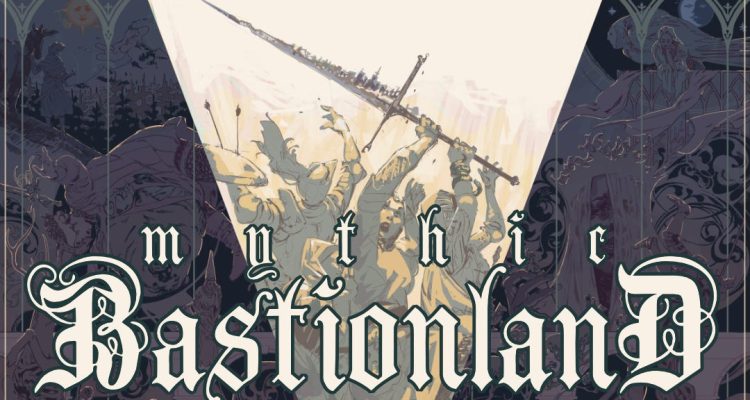
- Coming Soon: Mythic Bastionland!
- Our Mythic Bastionland, Session 1
- Our Mythic Bastionland, Session 2
- Our Mythic Bastionland, Session 3
- Our Mythic Bastionland, Session 4
- Our Mythic Bastionland, Session 5
- Our Mythic Bastionland, Session 6
- Our Mythic Bastionland, Session 7
- Our Mythic Bastionland, Session 8
- Our Mythic Bastionland, Session 9
- Our Mythic Bastionland, Session 10
- Our Mythic Bastionland, Session 11
- Our Mythic Bastionland, Session 12
- Our Mythic Bastionland, Session 13
- Our Mythic Bastionland, Session 14
- Our Mythic Bastionland, Session 15
- Our Mythic Bastionland, Session 16
- Our Mythic Bastionland, Session 17
- Our Mythic Bastionland, Session 18
- Our Mythic Bastionland, Session 19
- Our Mythic Bastionland, Session 20
- Our Mythic Bastionland, Session 21
- Our Mythic Bastionland, Between Sessions 21 and 22: The Feast
- Our Mythic Bastionland, Session 22 and Epilogue
- Our Mythic Bastionland Wrap-Up: Behind the Scenes
Here’s the play report for our third session of Mythic Bastionland, after a few weeks we had unavoidably to take off gaming. If you’re just joining us, I’d recommend starting at the first session and reading forward from there.
When we left off, the Knights had just emerged from the ruin they’d explored, Sir Augustine bearing a book of poems about The Green Woman Mavrydd and a hallucinogenic berry from the tree in the Moss Bear cave beneath the ruin, and Sir Yorick bearing a seed from the small outbuilding within the ruin. (Ser Lyssa did not collect anything there, except her wits after the shared hallucination she had with Sir Yorick.)
The characters set off at a leisurely pace due east through the woods. [They crossed into the next hex, but I didn’t reveal the surrounding terrain since (a) they were still in deep woods, and (b) because something happened quite soon. after they crossed into the hex.] For a time, they saw nothing particularly strange except the occasional enormous leaf falling from the strange branches that had expanded to grow across the sky overhead. The forest grew thick, vines studded with fat purple blooms hanging from the branches of some of the trees.
Then, after a few hours of travel, they heard screaming not far away in the woods—a few women’s voices calling for help, and one man’s voice vowing to rescue his beloved darling. They rushed toward the sound, and an old man ran up to them, apparently fleeing trouble.
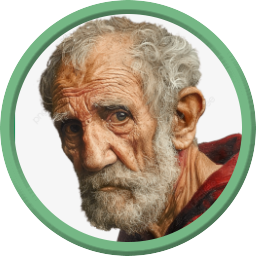
The old man, panting and struggling to speak, begged them for aid, which they immediately agreed to render. A little ways off, they discovered a strange scene. Another old man lay near the opening of a covered wagon wagon, being menaced by a cloudy figure.

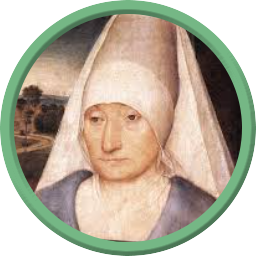
A second cloudy figure had seized an older, wimpled woman and was trying to drag her toward a tree. (A few more wimpled women stood some ways off, screaming in terror.)
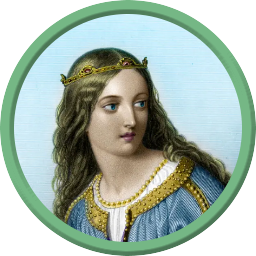
A third cloudy figure leaped down from the roof of the wagon and went into it, while a fourth vaporous figure had a younger woman in hand, and had dragged her about ten feet up the side of a tree…
… while a younger man cried out, attempting to climb up the tree and only falling upon his backside.
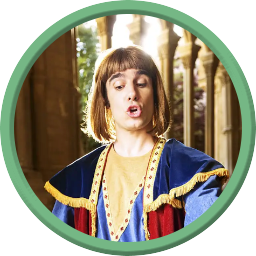
Sir Yorick…

… took immediate note of the damsel in distress, and led his horse toward her, stabbing with his dagger at the legs of the cloudy figure who was abducting the woman. After a few stabs—one of which set the cloudy figure off balance—he dropped his dagger and climbed from his horse up into the tree.
Meanwhile, Sir Augustine…

dismounted and approached the vaporous figure that was threatening the old man on the ground, and attempted to reason with it. The vaprourous form replied by emitting a nearly silent hiss of cold steam into the air, and then it held up a hand and a hooked trident of similarly vaprorous nature manifested in its hand. Melee ensued, despite Sir Augustine’s repeated attempts to reason with the figure. He noticed, however, that the figure was holding a handful of what seemed to be flowers, steams and roots and all, but the figure dropped it during the combat. In a few moments, he slew the figure, which began to leak steamy vapour like blood, dripping upwards into the sky, as the limp figure floated after it.
At the same time, Ser Lyssa…

… came to the aid of the wimpled woman, only to attract the attention of the cloudy figure in the wagon. She fought bravely, inflicting a sore wound upon the would-be kidnapper, and then, when Sir Augustine advanced to come to her aid, she suddenly slaughtered the kidnapper and wounded the other vaporous figure, who’d come from the cart, after Sir Augustine had struck it with his mace. Soon both figures lay dead. Although Ser Lyssa had inflicted the lion’s share of the damage on the pair, and had taken the most injury in the confrontation, Sir Augustine began to brag loudly about all that he had achieved in the battle, before it was even over.
Just then, Sir Augustine spied two more of the cloudy raiders approaching from above, sliding down the sides of trees. He shouted a warning, and Ser Lyssa responded immediately by launching her dagger at one of the figures. Unfortunately, her dagger ended up embedded high in a tree. (She would not retrieve it.)
Meanwhile, Sir Yorick continued to struggle against the other kidnapper, all the while the young man nearby shouting recriminations against his interference while failing to scramble up the tree himself. Finally, Sir Yorick seized the young woman around the waist and pulled her free from the would-be abductor’s grasp. Sir Augustine approached, attempting to aid Sir Yorick, but because he was dismounted, he could not reach the figure with his mace. The cloudy figure leaped into the air, exasperated, and seemed to take note of its dead companions for the first time. It issued a hiss of steam at the approaching raiders and as a group they fled up into the trees.
In the aftermath of the battle, the Knights spoke with the victims of the attack. Sir Yorick discovered that these people were some kind of religious pilgrims, devoted to The Six Saints, and that they had been traveling the realm, visiting settlements and Seers. The group’s leader was the younger woman than he had rescued, a maiden named Eloesa. The group had, in fact, just come from the crypt of the Brazen Seer, which was located on an island called Brass Isle, to the North. They were on their way to Caerwyn, across Great Caerwyn Bridge, just southeast of their current location and across the Gold River.
Sir Augustine, meanwhile, inquired as to whether they recognized the name Mavrydd, which none of them seemed to know, and discovered that the group was funding their travel by giving away “Century Blooms,” supposedly priceless flowers that were the envy of all the wealthy and powerful individuals in the realm: these were indeed the flowers that the cloudy raiders seemed to have been intent on stealing, and which they dropped in great numbers around the wagon. One of these flowers was offered to Sir Augustine, who disgustedly refused it. Ser Lyssa accepted it in his stead.
Then Sir Yorick finagled the further offer of more flowers—one for each of the Knights—in exchange for accompanying the group to the nearby settlement called Caerwyn, which the group knew lay nearby. Eloesa reluctantly agreed, parting with the flowers as if with a great fortune. (As Sir Augustine had refused his flower, Lyssa ended up with two of them.)
The group traveled just far enough to get out of the woods, as it was later in the day and the sun was going down, and then they set up camp alongside the pilgrims. They learned a little more information over dinner, after Sir Yorick shared his food with them, such as the rough locations of a couple of seers in the realm: one (The Crimson Seer) dwelt in a swamp off to the east, and another (The Painted Seer) dwelt in a manse in the mountains off to the southwest. Eloesa hailed from a settlement named Blackwort Castle, the seat of power in the realm where rules Borran Gladsmere. The Knights, for their part, shared an account of what they had seen in the ruined temple (?) of Mavrydd, not far to the west. Apparently the pilgrims had left a trail of precious, coveted Century Blooms behind them in their travels, gifting them to the rulers of each seer’s sanctum and settlement along the way.
Sir Yorick privately expressed a degree of lingering distrust of the group, and so he suggested the Knights should each take a turn standing watch through the night. They did so, but happily the night passed uneventfully, and the characters recovered from their wounds and exertions. As the sun rose, they prepared themselves to set out toward the Southeast, accompanying the pilgrims to the settlement of Caerwyn.
[We’ll start next session with the hexmap reveal and with me giving details about features visible in the distance, but for now, I’ll just share the map as they’ve uncovered it so far, including what their last hex movement uncovered.]
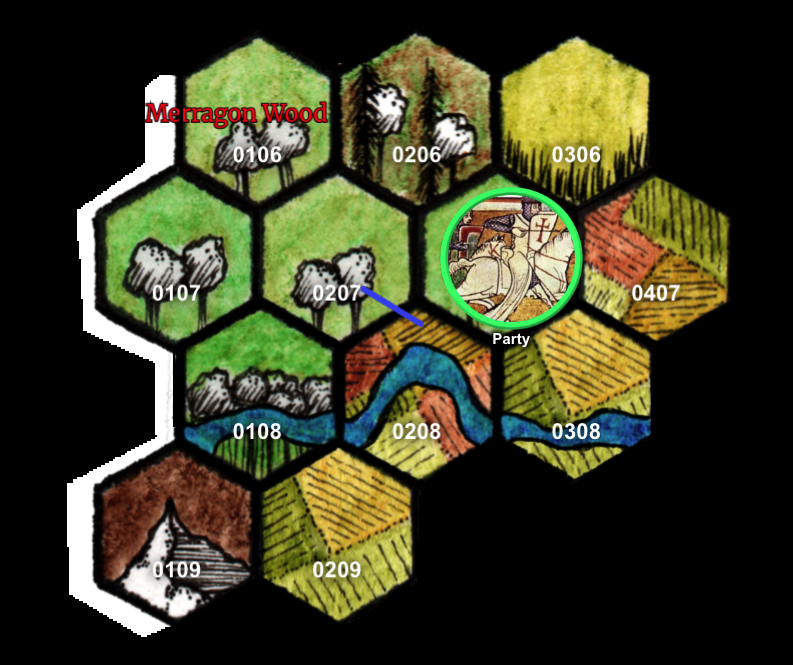
Notes: Incidentally, that combat took a long time, but it’s mostly just because we’re getting used to the combat system. I’m sure things will streamline better once we’re used to it. Also, combat with multiple different groups fighting is way slower than combat where it’s a group of Knights wailing away at one very beefy target. Fewer combined rolls, and all that.
Enjoying your recounting of the brave knight’s adventures so far!
Just one thing please, why did Sir Augustine refuse the century blooms so vociferously? Was this an ‘honour’ thing or because he was suspicious of the travellers?
(No spoilers please) :)
Thanks!
As for the rejection of the Century Blooms, we didn’t talk about it overtly, but I suspect it’s probably mostly about the fact that Sir Augustine is the Gilded Knight, a warrior who wears gold-plated armour with a gold-plated helm and shield and a golden mace… gold, gold, gold. How valuable could some flowers seem when one is decked out in literal gold?
It strikes me, writing the above, that I rarely get into the mechanical reasons why characters do the things they do, like specifically the characters’ Passions. (For example, Sir Augustine recovers SPI (Spirit) when he takes credit for a victory; Sir Yorick, when he comes out ahead in a bargain; and Ser Lyssa, when she restores the Balance of Justice. At least two of those Passions came up in the session, but I didn’t directly highlight them as such in my writeup above.) I’ll try be a bit more overt about these things when I write up sessions in the future, so readers can see how the mechanics inform the way characters got played.