This post is one in a series of readings I’m posting of each poem in Ezra Pound’s The Cantos, a few at a time. The readings are atypical, for reasons made clear in my first post in this series. This post continues my work on the “Chinese” Cantos, covering Canto LIV.
Category: BOOKS & AUTHORS
Blogging Pound’s The Cantos: Canto LIII
This post is one in a series of readings I’m posting of each poem in Ezra Pound’s The Cantos, a few at a time. The readings are atypical, for reasons made clear in my first post in this series. This post continues my work on the “Chinese” Cantos, covering Canto LIII.
The Other City of Angels by S.P. Somtow
Well, I haven’t posted about any of the books I’ve read lately, so I may as well start again, and I figure this is as good a place as any to begin. Somtow Sucharitkul (who goes by S.P. Somtow in his fiction writing career) has always struck me as someone who might be a kindred spirit, someone I’d like to sit down with for a beer or coffee or something. He’s a classical musician (conductor and composer), an SF author, and has spent significant chunks of his life living abroad. His blog amuses me, and he has done amazing things …
Yes, White Cats Can Play Jazz, So Can We Talk About Something Else?
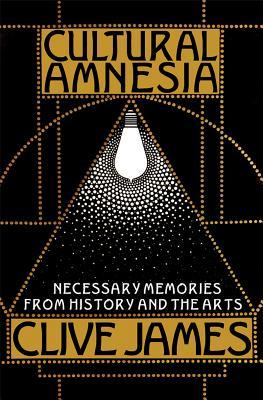
Sometimes, the best way to figure out what an author knows about his or her subject is to find the bit of the book where the discussion is of a topic you know something about: you can usually pretty get a sense of whether the author is full of shit, or authoritative, or something else entirely. So it’s a bit discouraging that when I picked up Clive James’ Cultural Amnesia: Necessary Memories from History and the Arts and turned to the chapter on Louis Armstrong, that I found a tiny blurb about Armstrong’s life and contribution, followed by this quote: …
Blogging Pound’s The Cantos: Canto LII
This post is one in a series of readings I’m posting of each poem in Ezra Pound’s The Cantos, a few at a time. The readings are atypical, for reasons made clear in my first post in the series. This post begins my work on the “Chinese” Cantos, starting with Canto LII.
Blogging Pound’s The Cantos: Canto LI
This post is one in a series of readings I’m posting of each poem in Ezra Pound’s The Cantos, a few at a time. The readings are atypical, for reasons made clear in my first post in the series. This post ends off my discussion of The Fifth Decad of Cantos (also sometimes called the “Leopoldine” Cantos) by specifically dealing with Canto LI, the final Leopoldine Canto.
Blogging Pound’s The Cantos: Canto L
This post is one in a series of readings I’m posting of each poem in Ezra Pound’s The Cantos, a few at a time. The readings are atypical, for reasons made clear in my first post in the series. This post picks up again (after another hiatus–I was busy for the last few weeks) one step closer to the end of The Fifth Decad of Cantos (also sometimes called the “Leopoldine” Cantos). Today I’ll be specifically dealing with Canto L, the penultimate Leopoldine Canto.
Gin Craze Story Drafted…
As I mentioned on Twitter the other day, I recently finished a draft of a weird novella with the working title, “In the Company of Distillers.” I guess the best way to explain the story is that it’s set in London at that part of the 18th century Gin Craze just prior to the government’s second attempt (and the first serious one) at Gin Prohibition… As far as the makeup of the story, it’s probably easiest to explain it more like the way one does a gin-based cocktail, that is, in the form of a recipe: two parts alchemy one …
Delany on “Talented Writing”
Marc Laidlaw recently shared a link on Facebook to a post on “Good Writing vs. Talented Writing”over on Brainpickings featuring some ideas by Samuel Delany. Essentially, Delany draws a line between “good writing” and superior “talented writing”: The talented writer often uses specifics and avoids generalities — generalities that his or her specifics suggest. Because they are suggested, rather than stated, they may register with the reader far more forcefully than if they were articulated. Using specifics to imply generalities — whether they are general emotions we all know or ideas we have all vaguely sensed —is dramatic writing. A trickier proposition …
Review in Kyoto Journal #77
New as of right now: my long-delayed review of B.R. Myers’ The Cleanest Race: How North Koreans See Themselves and Why It Matters is out in the current issue of the Kyoto Journal (#77). Though the title is goofy — “Minjok Mama Madness! and Other Fairytales From North of the 49th Parallel” — the subject is serious, and the review is overall quite positive. My review isn’t in the online preview, though, so you’ll have to get a copy of this fine journal in order to read it. I’m enjoying my contributor’s copy, and can recommend the issue (and the journal) without …