Georgian England, The Developing World, Crime Prevention, and Internet Trolls

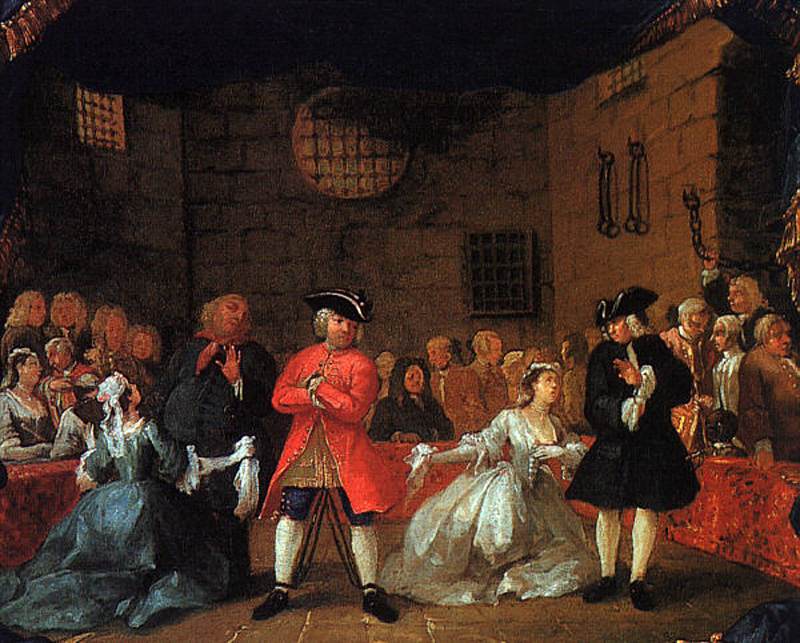
Life in Georgian London was an alien sort of existence: it’s hard to wrap your head around it, though there is one analogy I’ve discovered for it that neatly says a lot about the things we take for granted… and also suggests something of our future, too. I suspect the unexpected key is this figure: Yes, our old friend… the internet troll.  I’d argue that, among other things, the Internet is pretty invaluable in keeping humanity acquainted with what it’s like to live in a lawless, unpoliced world. Which is the kind of world that people in the 1730s lived …

Continue Reading

Stars in My Pocket Like Grains of Sand by Samuel Delany

Stars in My Pocket Like Grains of Sand is a very difficult book to talk about. It’s a challenging book to read, too, but talking about it seems harder than reading it, to me. That’s usually a sign that there’s something worth thinking over, though I am struggling to find a way into discussing it. Certainly, a mere “reader reaction” of the type that one sees all over the internet seems insufficient, for the same reason it strikes one as ridiculous for someone to walk out of a hall where a piece by Mahler or Webern or Stravinsky has just …

Continue Reading

Howard Who? by Howard Waldrop

I just finished Howard Who? on Tuesday night, though I first read “The Ugly Chickens” a couple of years ago, and loved it. (My edition is the Peapod Classics one put out by Small Beer Press, pictured at the right.) So of the “slipstream” books I’ve read from Small Beer aren’t really my thing, but this collection was overall really, really good. It’s worth noting, by the way, that this is a Small Beer reprint: the collection was Waldrop’s first, and originally was put out by Doubleday in 1986. It seems so obvious to me that a smaller press could fruitfully …

Continue Reading

Two Comets: H.G. Wells and W.E.B. Du Bois

I mentioned the other day that I’ve been writing a couple of short stories, just to give myself a breather on the novel I’m working on. One of those stories, the one I discussed in connection with the 1960 Newport Jazz Festival, is kind of response to two interesting “comet” SF stories I read back in 2010, and have been thinking about ever since: In the Days of the Comet by H.G. Wells, “The Comet” by W.E.B. Du Bois (which was collected in the first of Sheree Renée Thomas’ Dark Matter anthologies, but it’s also available in the public domain, as part Du Bois’ …

Continue Reading

Newport Jazz Festival, 1960:The Year They Called the National Guard

You won’t catch me hating on the Newport Jazz Festival, of course! When I was a teenager, the festival on Rhode Island had a kind of magical aura of importance: on PBS I’d seen footage of Gil Evans playing there with Art Farmer: https://www.youtube.com/watch?v=nlgKLwhoVgI … and listened time and again to John Coltrane and Archie Shepp’s New Thing at Newport: … and Dizzy Gillespie’s big band recording At Newport: https://www.youtube.com/watch?v=GJF7075fvg4 … dozens and dozens of times. (Seriously, in high school, I was baffled by how everyone was into music we all knew nobody would be listening to by 2002. My jam …

Continue Reading

The Beggar’s Opera by John Gay

(Note: This is a longish post. I apologize that I could not shorten it further, but I haven’t the time.) Those in the know will note that I specified only John Gay, and not the composer Pepusch: I’m working on getting hold of a copy of the opera–the 1983 staging, supposedly with the original music, aired by the BBC–but for the moment I just have the public domain etext from Project Gutenberg. It’d be an understatement to say that The Beggar’s Opera was kind of a big deal during and after its first staging in Haymarket back in 1728. Better to …

Continue Reading

Steam-Powered Brewing and Gibson & Sterling’s The Difference Engine, or, Research vs. That Other Thing

I mentioned a while back that I’m listening to an audiobook of The Difference Engine. Well, I’m pretty close to the end now, and enjoying the hell out of it. One phrase that comes to mind is how Edward Said described the novel as a form (in the process of explaining why understanding novels were useful to understanding imperialism), in Culture and Imperialism: Note the highlight: “an incorporative, quasi-encyclopedic cultural form.” That is not only something I aspire to in my own fiction writing, but it most definitely is true of The Difference Engine, except it’s sort of a weirdcyclopedia, …

Continue Reading

The Harlot’s Progress (BBC4) and The Georgian Underworld: A Study of Criminal Subcultures in Eighteenth-Century England by Rictor Norton

Historical fiction–speculative or otherwise–is a challenge for a number of reasons, but probably the biggest challenge is the problem of texture: how to get the texture of that alien historical world right? This is what impressed me about China Miéville’s depiction of Bas-Lag in Perdido Street Station (a book I discussed here a decade ago): sure, as one friend commented, it reads like someone’s AD&D adventure… but the world is so utterly textured, so rife with details. It feels like a real city at some grungy, nasty moment in its history, like the festering horror-show that was London in an …

Continue Reading

Literary Sampling and Remixing: Sterling & Gibson’s The Difference Engine

I’ve intended to get around to The Difference Engine for years on end, but never started in on it in earnest until this year, for reasons I can’t explain, really. I’ve had a copy all these years, but never quite gotten around to it. Anyway, I picked up an audiobook edition of the novel using one of my Audible credits, since I’ve been listening to audiobooks a fair bit while walking, or doing chores around the house, and I’m enjoying it immensely. I remember reading an interview with the authors in Science Fiction Studies many years ago, and being very curious about the method they …

Continue Reading

Blogging Pound’s The Cantos: Canto LVI & LVII

This entry is part 43 of 60 in the series Blogging Pound's The Cantos

This post is one in a series of readings I’m posting of each poem in Ezra Pound’s The Cantos, a few at a time. The readings are atypical, for reasons made clear in my first post in this series. This post marks a return to this project of blogging the Cantos after half a year away from it. I figured I might as well try to finish the slog through the Chinese and Adams Cantos, so that I can at least reach the Pisan Cantos, which it is said is worth the effort. We’ll see, though: the Chinese Cantos, at least, …

Continue Reading