This post is one in a series of readings I’m posting of each poem in Ezra Pound’s The Cantos, a few at a time. The readings are atypical, for reasons made clear in my first post in this series. This post continues my work on the “Chinese” Cantos, covering Canto LIV.
Category: REVIEWS
Blogging Pound’s The Cantos: Canto LIII
This post is one in a series of readings I’m posting of each poem in Ezra Pound’s The Cantos, a few at a time. The readings are atypical, for reasons made clear in my first post in this series. This post continues my work on the “Chinese” Cantos, covering Canto LIII.
The Other City of Angels by S.P. Somtow
Well, I haven’t posted about any of the books I’ve read lately, so I may as well start again, and I figure this is as good a place as any to begin. Somtow Sucharitkul (who goes by S.P. Somtow in his fiction writing career) has always struck me as someone who might be a kindred spirit, someone I’d like to sit down with for a beer or coffee or something. He’s a classical musician (conductor and composer), an SF author, and has spent significant chunks of his life living abroad. His blog amuses me, and he has done amazing things …
Yes, Except…
Note: This post was pre-written for posting long ago. I set it to autopublish later on, as I won’t be having much internet access for the next few days. I do have it, off and on, but not enough to be logging in and writing posts for the moment. I’m working on a somewhat complex series of posts that in a sense distill and clarify things I’ve been thinking about (and writing about here) lately for a while, tied to writing, writing theory and writing books, Hollywood, and modern culture in general. But that “somewhat complex” means it takes time. …
Yes, White Cats Can Play Jazz, So Can We Talk About Something Else?
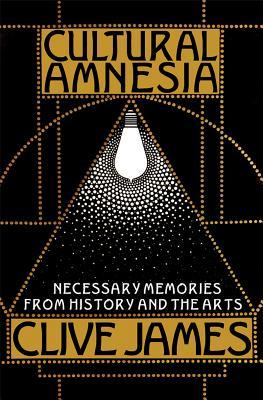
Sometimes, the best way to figure out what an author knows about his or her subject is to find the bit of the book where the discussion is of a topic you know something about: you can usually pretty get a sense of whether the author is full of shit, or authoritative, or something else entirely. So it’s a bit discouraging that when I picked up Clive James’ Cultural Amnesia: Necessary Memories from History and the Arts and turned to the chapter on Louis Armstrong, that I found a tiny blurb about Armstrong’s life and contribution, followed by this quote: …
Blogging Pound’s The Cantos: Canto LII
This post is one in a series of readings I’m posting of each poem in Ezra Pound’s The Cantos, a few at a time. The readings are atypical, for reasons made clear in my first post in the series. This post begins my work on the “Chinese” Cantos, starting with Canto LII.
Chico and Rita (2010)
There’s a saying that in an SF story, the science should be one of the characters. Well, that’s also true in a jazz story: in any film about music, the music needs to be so present, so powerful, that it ends up being one of the characters itself. Happily, Chico and Rita gets that right–along with a lot of other things. It’s a tragedy, of course, but a tragedy of a specific kind. You could come at it from any number of angles, and of course the film itself suggests some of them: the opening suggests the tragedy of the …
Sound of Noise (2010)
When Mrs. Jiwaku suggested we watch the film Sound of Noise, I was skeptical at first. Musical terrorists in Sweden, that just sounded potentially too cheesy to be good. Well, a couple of reservations aside, I actually found myself charmed by the film.
Jazz/SF Intersection: Nichelle Nichols and Duke Ellington
It’s more often than you might expect that I find intersections between the worlds of jazz music and SF. John Coltrane read Flash Gordon and other pulps and comics as a kid, and as I discuss in that same post, Sun Ra (and several other jazz musicians) talked about life from the point of view of an alien from another world who was visiting the Earth. (Some others talked more in terms of being “trapped” on the Earth, and there, the sad root of the metaphor probably lies.) But in happier, more exciting news: my latest find, which maybe is …
Blogging Pound’s The Cantos: Canto LI
This post is one in a series of readings I’m posting of each poem in Ezra Pound’s The Cantos, a few at a time. The readings are atypical, for reasons made clear in my first post in the series. This post ends off my discussion of The Fifth Decad of Cantos (also sometimes called the “Leopoldine” Cantos) by specifically dealing with Canto LI, the final Leopoldine Canto.