Back to Brewing (Kinda)

Years ago, I was an avid homebrewer. Then I moved someplace hot, where it wasn’t really practical to brew, and when we moved back to Korea, one thing after another prevented me getting back to it. (At first, it was just money and having a new kid; then it was the shoddy electrical system in our apartment, and the fact I was focusing on writing and parenting.) But finally I am brewing again… and, unsurprisingly, part of the motivation is my son: I proposed a trade to my friend, whose kids had outgrown their LEGOS—a batch of beer for the …

Continue Reading

Strange Brews

Some beer news, since I haven’t posted anything in ages. It’s now been four years since I’ve made any beer myself, though I am hoping to get a Saison brewed before the end of summer. (It’s hot enough for it, after all!)  But this is a news news post, since there’s been some odd and interesting brewing-related pieces in the news.

Continue Reading

Some (Admittedly Unkind) Words for Henry Thrale

I mentioned recently that I’d been reading Lee Morgan’s biography of Henry Thrale. I’ve finished it, and collected some material on beer history–what little there was in the book. For the life story of a man whose wealth was gotten in the making of beer, the subject comes up much less than you might imagine… but then, as I mentioned last time, Thrale was always more interested in fox-hunting and clever conversation with upper-class people than the business that gave him such a wealthy lifestyle. Morgan’s text is a funny sort of book: it has lots of things that make it worth reading, including …

Continue Reading

Imaginable Beers: A Primer for Writers of Speculative Fiction

This entry is part 6 of 6 in the series For Writers

Recently, a writer friend was asking around on Facebook for some information about the history of brewing and distilling. Since I’ve been studying up on these subjects (and blogging on the subject: see here for brewing, and there’s some stuff about distilling mixed into this tag), it was suggested I might be of some help. I started writing a longish response, and then decided that rather than toss all that information down into the Facebook crevasse where it would never be seen again, I would make a blog post about it. Note, this is primarily directed and writers of fantastical or speculative fiction, but …

Continue Reading

Hop-Pickers and Pagan Ritual, from the 1750s to the 1930s

I’m still working on a series of posts on the South Sea Bubble. It’s kind of fractal: the more you look, the more you see, and it all links so complexly that it’s hard to fit into a single series of posts. So anyway, in the meantime, here’s another subject I’ve been reading up on: the tradition of hop-pickers. It seems like there’s been a surge of nostalgic memory for the tradition of Londoners from the East End making their yearly pilgrimage–a pilgrimage involving 250,000 people at its height, at the beginning of the 20th century–out to East Kent, where a large proportion …

Continue Reading

Yeast, as Understood in 1736

  I’m really glad I was able to get a second opinion on one little detail that has become of great importance to my ongoing novel project. That is: how well did brewers understand the function of yeast in brewing back in 1736? It might sound strange, but that detail is incredibly important in terms of a lot of things going on in the book! During my visit to Korea, I got a chance to read a fair bit of Jamil Zainasheff and Chris White’s book Yeast: The Practical Guide to Beer Fermentation. I wasn’t particularly blown away by the book: …

Continue Reading

A Brief Word About Historical Terminology

Just read a wonderful piece over at the excellent beer history blog Zythophile on the historical changes undergone by the terms “ale” and “beer”: I used to think that their merger into synonymity was pretty much complete in Georgian England at the latest, agreeing with the historian WH Chaloner, who wrote in 1960, reviewing Peter Mathias’s great book The brewing industry in England, 1700-1830: “By the end of the seventeenth century the terms ‘ale’ (originally a sweetish, unhopped malt liquor) and the newer ‘beer’ (a bitter, hopped malt liquor) had come to describe more or less identical products following the victory …

Continue Reading

Beer and the Habsburgs, Plus Lager Confusion

In my recent post about the economics of brewing and the consolidation of breweries in London in the wake of the Gin Craze, I mentioned that I’m searching for sources on beer under the Habsburgs. I haven’t found all that much, but maybe that shouldn’t be a surprise: after all, wine was preferred in Habsburg Vienna, and the kind of taxation that marginalized wines in England only affected wine consumption in the Habsburg Empire more slowly… though the eventual stratification we see in England does eventually appear in the Habsburg domains as well, and for the same reasons: ‘Modest’ is …

Continue Reading

Steam Injection Brewing? (and some Belgian brewing links)

Good grief, this sounds cool. (There are more posts on the subject, too, of course, like this one, or these ones, over here, if you search around.) Like I said, it sounds cool, but a little hard to set up. Sometimes I wish I had a little stronger background with hardware and building stuff. I think I really would like to have a small steam-powered mash/boil setup. Also, here are some links connected to Belgian beer, which I’m posting here so I can find them again, but which others might appreciate too: I always forget to go and check out …

Continue Reading

Fusion Brewday: TriplIPA Riff — Wonmisan Tripel IPA

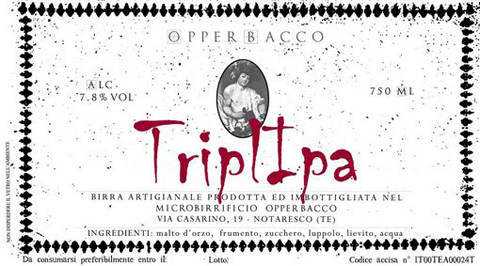
On the weekend, a few of the brewers in Seoul gathered for a goodbye party for a brewer many of us have known and learned from over the last few years, Kevin. I brought a bottle of the OpperBacco brewery’s TriplIPA Speciale, a beer that I’d picked up in Rome on recommendation from the proprietor of the excellent Johnny’s Off-License. We sampled it at the end of the night, which was probably not optimal, but the beer seemed to be well-received. Fitting with what I noticed about Italian craft brew — that there’s a marked Belgian influence — this seemed …

Continue Reading