Steam-Powered Brewing and Gibson & Sterling’s The Difference Engine, or, Research vs. That Other Thing

I mentioned a while back that I’m listening to an audiobook of The Difference Engine. Well, I’m pretty close to the end now, and enjoying the hell out of it. One phrase that comes to mind is how Edward Said described the novel as a form (in the process of explaining why understanding novels were useful to understanding imperialism), in Culture and Imperialism: Note the highlight: “an incorporative, quasi-encyclopedic cultural form.” That is not only something I aspire to in my own fiction writing, but it most definitely is true of The Difference Engine, except it’s sort of a weirdcyclopedia, …

Continue Reading

Isinglass

There’s some wonderful information in Peter Mathias’ The Brewing Industry in England 1700-1830, especially if you’re looking for funny details about the world of London brewers in the 1730s that could be hacked into alchemical-industrial conspiracy. For example, isinglass: It’s basically made out of fish bladder, and it’s used as a “finings”–that is, you dump some of it into your finished beer (in powder form, I think, though I’ve never used it myself), and it pulls the yeast to the bottom. In other words, it clears up your beer, and it was the main way of doing so prior to mode recent …

Continue Reading

He’s No Isambard Kingdom Brunel, but…

I know, I’m late to the party, but lately I’ve been reading Sydney Padua’s the webcomic The Thrilling Adventures of Lovelace and Babbage (coming soon as a book, apparently?), and, well: Everyone loves Isambard Kingdom Brunel, and for good reason: though he was more like the Tony Stark of his age–“accomplished” barely touches how important an engineer he was during his short but influential career in early Victorian London–the Wolverine-like look he gets in Padua’s comic (and, well, in the photos, really) is, er… I’ll put it this way: as Padua has noted, he’s an extremely popular character. He even got …

Continue Reading

Yeast, as Understood in 1736

  I’m really glad I was able to get a second opinion on one little detail that has become of great importance to my ongoing novel project. That is: how well did brewers understand the function of yeast in brewing back in 1736? It might sound strange, but that detail is incredibly important in terms of a lot of things going on in the book! During my visit to Korea, I got a chance to read a fair bit of Jamil Zainasheff and Chris White’s book Yeast: The Practical Guide to Beer Fermentation. I wasn’t particularly blown away by the book: …

Continue Reading

Ale & Beer in England in 1722, the Hop Fair at Stourbridge

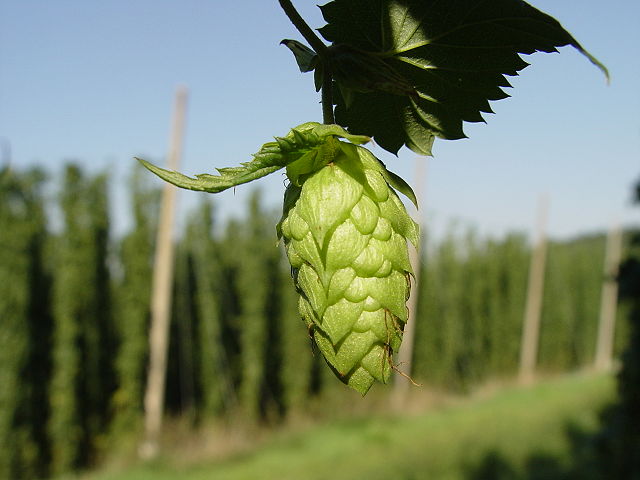
In his book A Tour through the Eastern Counties of England (1722), Daniel Defoe writes on hops and the hope trade at Stourbridge Fair in 1722, but also discusses some details of the brewing industry, such as the difference between ales and beers (as the terms were then used). He marveled at the woollen goods on sale, but also at other commodities that interested him more… namely, hops…  More beneath the cut.

Continue Reading

A Brief Word About Historical Terminology

Just read a wonderful piece over at the excellent beer history blog Zythophile on the historical changes undergone by the terms “ale” and “beer”: I used to think that their merger into synonymity was pretty much complete in Georgian England at the latest, agreeing with the historian WH Chaloner, who wrote in 1960, reviewing Peter Mathias’s great book The brewing industry in England, 1700-1830: “By the end of the seventeenth century the terms ‘ale’ (originally a sweetish, unhopped malt liquor) and the newer ‘beer’ (a bitter, hopped malt liquor) had come to describe more or less identical products following the victory …

Continue Reading

Beer and the Habsburgs, Plus Lager Confusion

In my recent post about the economics of brewing and the consolidation of breweries in London in the wake of the Gin Craze, I mentioned that I’m searching for sources on beer under the Habsburgs. I haven’t found all that much, but maybe that shouldn’t be a surprise: after all, wine was preferred in Habsburg Vienna, and the kind of taxation that marginalized wines in England only affected wine consumption in the Habsburg Empire more slowly… though the eventual stratification we see in England does eventually appear in the Habsburg domains as well, and for the same reasons: ‘Modest’ is …

Continue Reading

Rankings and Ratings for Beer: Lessons from the Classroom, and Lessons On the Classroom

I posted earlier today on Facebook regarding the topic of ratings collection design systems for beer ratings websites like BrewAdvocate (below, referred to as “BA”), based on my experience designing grading rubrics for teaching and student evaluation purposes. I was posting in the context of others arguing that the ratings systems on various enthusiast rating websites were relatively less meaningful in the fine gradations; that a been with a 97% quality rating may not be “better” than a beer of a 95% rating. I responded as follows: Yeah, also because people’s rankings are affected by others’ rankings, and by reputation. I …

Continue Reading

If I Could Brew Now…

Saigon doesn’t seem to be a great place to be a homebrewer. As far as I know, there’s nowhere to buy grain, yeast, or hops in the city, and while there is  and active community of homebrewers up in Hanoi, there doesn’t seem to be one in Saigon. I could be wrong–and if I am, I’d love to hear more about it–but that’s my impression from scouring the web. This is tolerable, for me, because I brewed a hell of a lot–to the point of exhaustion, and being a bit tired of brewing–by the time I left Korea, and because Saigon …

Continue Reading

On Building a Makkeoli Market

Zenkimchi wants Korean promoters to stop calling makkeoli “rice wine” for the very obvious reason that it’s actually not a wine. Of course it’s not rice wine, it’s rice beer (or, yes, specifically “rice ale”), as any brewer can tell you. Of course, he sort of bolts past the point that is very obvious in this picture: If you look at that image for a moment, you’ll get why there’s not a hope in hell Korean makkeoli-promoters are going to consider branding makkeoli as “rice beer” or “rice ale.”

Continue Reading