Review(s) of “Sojourn,” and Other Thoughts

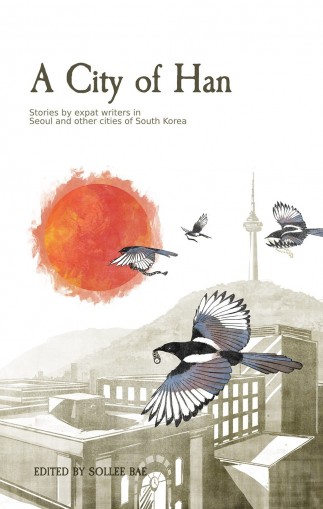
I was very gratified a few weeks ago to learn of Simon Scott’s comments about by story “Sojourn”, one of the stories from the 2020 collection  City of Han that he discussed in a review in Kyoto Journal. He begins this way: In this era of extreme global hypersensitivity to race and national narratives, it is arguably a high-risk proposition for a Western expat author in Asia to write about such things. Yet two of the authors represented in this volume of expat short stories from South Korea, Gord Sellar and Ron Bandun, fearlessly walk the ideological plank of their …

Continue Reading

Please Look After Mom by Kyung-Sook Shin, and Some Thoughts on Culture-Specific Modes of Reading

Last semester, a student of mine gave me a paperback copy of the English translation of Please Look After Mom by Kyung-Sook Shin. It was a very kind gesture, and I appreciated it very much. This whole culture of gifting professors–sometimes before exams, which is a little uncomfortable, but more often after–is rather nice. I’ll be honest, though: while some mainstream Korean literature I’ve found enjoyable, a lot of it leaves me kind of cold, for reasons that remind me of things my own students say when I ask them to interpret texts. I find that the standard mode of …

Continue Reading

Movies I’ve Seen Lately

In the past few weeks, I’ve seen a few movies I thought were pretty good, though not as good as a lot of people seem to think. Indeed, even Miss Jiwaku has been more thrilled with them than I’ve been. The three I’m thinking about were: Limitless, Batman: The Dark Knight Rises, and Cabin in the Woods. Just in case you’re scared of “spoilers” I’ll put my thoughts in the extended section.

Continue Reading

Korean “Disaster” Films: 연가시 / Deranged

This entry is part 56 of 72 in the series SF in South Korea

I guess I blinked a week or two ago, as I missed Cabin in the Woods’ very brief release in Korea. This suggests it was a probably a good film, since good films here are rarely shown more than a week. Resignedly, Miss Jiwaku and I schlepped it down to the local cinema to watch 연가시 (apparently known in English as Deranged, which is not the best title choice, but then, it’s not the best movie so I don’t think the foreign title’s a problem). Deranged is, just barely, Korean science fiction, so I figured I’d give it a review here. In …

Continue Reading

Rainer Maria Rilke’s Stories of God

Those who know me well can guess that my feelings about this book are, but they might guess for the wrong reasons, so I’ll just come out and say it: I have nothing against fiction with deities in it. Hell, I’m reading Ezra Pound’s The Cantos, and if you can find a modern English text (except perhaps by Neil Gaiman or N.K. Jemisin) more chock full of deities than that, I’ll be surprised. I was on a Rilke kick back in 2009, when I was traveling through the US. While I’d read Letters to a Young Poet over a decade before …

Continue Reading

도착 (The Arrival) — The Red Leap Theater Performance, Seoul (5 May 2012)

I mentioned a while back that the Red Leap Theater would be in Seoul soon to perform their adaptation of Shaun Tan’s wonderful masterpiece The Arrival . Well, tonight, my friend Sanko, Miss Jiwaku, and I attended the second-to-last performance. We were all quite impressed with it. I have to admit, I don’t often go for “modern dance” performances — often because, without some kind of narrative to hang on to, I find myself lost and bored — and so I wondered whether a dance troupe could really bring to life Tan’s wordless, intensely beautiful art. Without question, they did. They used all of …

Continue Reading

Pound and the Occult: Leon Surette’s The Birth of Modernism: Ezra Pound, T.S. Eliot, W.B. Yeats, and the Occult

This entry is part 14 of 59 in the series Blogging Pound's The Cantos

Depending on where you stand in terms of the literary establishment, my past week’s break from Canto-reading and Canto-blogging was either well spent, or a waste: personally, I consider it very well spent, but Leon Surette gives the impression that the majority of academic literary critics would disagree. Their antipathy towards him is perhaps understandable: they may not be emperors, but they dislike having a dissenter point out their lack of clothes as much as anyone, while Surette does so not just intelligently, but consciously… and not just because they’re dubious about Pound’s occult interests, but also because of what …

Continue Reading

Random Acts of Senseless Violence by Jack Womack

While there are many books I’ve read in the last few years and thoroughly enjoyed, it’s rare that I read something and feel as if I had been missing something amazing for years and years, and felt a desire to kick myself for taking so long to get around to something. Because I feel like I’ve learned something about the world, reading this novel: something desperately important and something we have forgotten, to our own peril. I first read Jack Womack’s word in 2000 or 2001 — I’d say probably the latter, just before I left Canada for Korea — …

Continue Reading

A Deepness in the Sky by Vernor Vinge

Every novel I read by Vinge seems to me to be better than the last. Maybe it’s because I started with earlier work, or maybe it’s just the impression that each of his books gives me. But one thing is for certain: A Deepness in the Sky certainly is a hell of a novel, space opera or not. I finished it last night, on the couch, very late into the night, and found myself in an odd position for such a time: I was excited about it, and wanted to talk about it. But it was the middle of the …

Continue Reading

Finding George Orwell in Burma by Emma Larkin

Of late, I’ve been on a sort of kick where I want to read short books — books of fewer than 300 pages, in general, often even shorter. As I’ve been on this kick, I’ve run into pairs of writings that explore the same basic terrain at different lengths. I mentioned this when I reviewed Patricia Anthony’s Happy Policeman and I’m noting it again as I review this book by Emma Larkin, though in this case the comparable text is this short article from Time, published in 2002 (a few years before Larkin’s book). In this case, I have to say, …

Continue Reading