Donald Clark’s Living Dangerously in Korea

I’ve mentioned Donald Clark’s book Living Dangerously in Korea: The Western Experience 1900-1950 a few times lately (and it will certainly come up again), but I haven’t really summed up my thoughts on the book, something I’m trying to do a little more since falling out of the habit last year. Here are my thoughts… 

Continue Reading

“Portraits” Completed, and More Thoughts on Musescore

I mentioned recently that I was working on digitizing my compositions from back in my music student days. Well, I finished another piece earlier, and decided to upload it tonight: Portraits for Two Bass Clarinets (1995) by Gord Sellar (Complete score in PDF format) There’s a recording of the premiere performance of the piece (and, I think, maybe the only performance so far) over on my Music page. The score here has minor corrections–but only minor ones, including some dynamics sketched in that should have been in the original, but somehow got left out–and there are a few small errors …

Continue Reading

Articles on Korean SF in _list Magazine

This entry is part 61 of 72 in the series SF in South Korea

For those interested in South Korean SF, but unable to read it themselves (like me) you will be interested in the little treasure trove of articles I’ve just run across on the subject. They were published as part of the Summer 2013 issue of the magazine _List, which appears to be published by the Literature Translation Institute of Korea. There are four articles in all: “Chronicling Korean Science Fiction” by Cho Sung-myeon, which discusses the history of Korean SF. This is a great piece with a lot more history than I ever found available anywhere else. Plenty of figures in Korean …

Continue Reading

Another Update, Another Theme Borked

Well, I updated WordPress. Like clockwork, another stylesheet bit the dust: fonts were all whacked out, menus not working properly, and who knows what else. It was a bit disappointing, but it seems inevitable these days, and at least replacement templates that (mostly) work straight out of the box are common enough. I’ve settled for what you see now, for the moment. (That is, if you’re reading on the page itself.) It has most of what I want, except for a nicely navigable menu at the header. (There’s supposed to be one, but it’s not showing up, and the submenus …

Continue Reading

Brief Note-(ation)

UPDATE (28 Feb 2014): Digitization completed. The file is available here, along with my comments on the software and more. UPDATE (27 Feb. 2014):  Well, I’ve finished the first movement, (sparse) dynamics and all. Here it is!  When I’ve finished all three movements, I’ll update again, combine the PDFs into a single file, and add it to the page where the audio is posted. The second and third are much shorter and simpler than the first, but it may take a little while for me to get around to it. (And not that I expect it’ll ever get performed, remixed, …

Continue Reading

The Really Intractable Thing: North Korea, Climate Change, and Why We’re Failing

Over at The Week, a depressing piece on the horrors up North, titled “North Korea isn’t Nazi Germany — in some ways, it’s worse”: Unless North Korea invades or bombs another country, or China gives up its patronage of the Hermit Kingdom, it’s hard to see much concrete coming out of the report. Paul Whitefield at the Los Angeles Times remembers the post-Holocaust slogan, “Never Again,” then throws up his hands in resignation: So what should the world do? What can the world do? Must we accept that in North Korea, basic freedoms — even such a simple thing as the right not …

Continue Reading

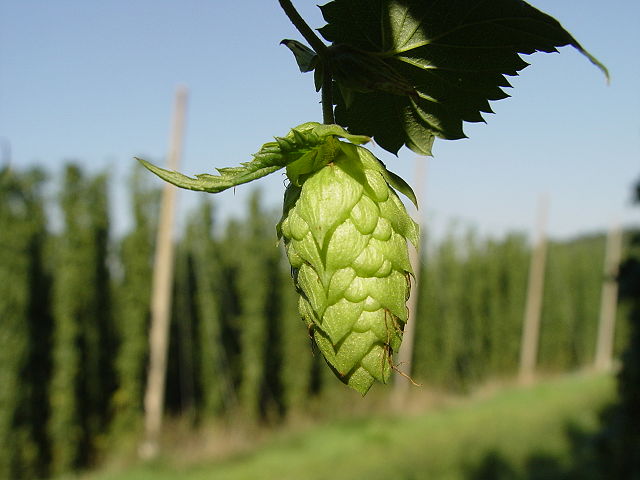
Ale & Beer in England in 1722, the Hop Fair at Stourbridge

In his book A Tour through the Eastern Counties of England (1722), Daniel Defoe writes on hops and the hope trade at Stourbridge Fair in 1722, but also discusses some details of the brewing industry, such as the difference between ales and beers (as the terms were then used). He marveled at the woollen goods on sale, but also at other commodities that interested him more… namely, hops…  More beneath the cut.

Continue Reading

Speed Skating and Death Threats

Believe it or not, this is not a rant. If I were going to rant about anything related to the Sochi Olympics, it would be Russia’s headfirst leap back into the Middle Ages in terms of its homophobic legislation, and the disgusting way the IOC caved to the Russian state’s barbaric laws. But I’m not watching the Sochi Olympics, so it’s not so much on my radar. But the other day I had an interesting, somewhat frustrating discussion, but ultimately (maybe) helpful discussion with a student the other day about the recent twittermobbing and threatening of Scottish speed skater Elise …

Continue Reading

The Bloom Effect, Part 2: Tiger Mom Retcon, The Bloom Effect, “Middle 2 Syndrome”, and Resistance in Context

This entry is part 3 of 3 in the series The Bloom Effect

This post is part of a series. I suggest you start at the beginning, to get the most out of it. Part 3: Hyperschooling and the Tiger Mom Retcon Last time, I talked about the idea of “Tiger Parenting” and how it’s primarily been discussed in the context of American education and upbringing. I talked about the importance of considering education and upbringing within a social context–how parenting is contextualized by society and education, how education is contextualized by parenting and society, and so on. The implications are enormous, of course: a mainstream Korean-styled upbringing in Korea is different from …

Continue Reading

The Bloom Effect, Part 1: Context, Context, and More Context

This entry is part 2 of 3 in the series The Bloom Effect

This post is the promised follow-up to my earlier post titled “Two Disconcerting Trends: Korean Kids, School Systems, And Parental Appraisal.” I have split the follow-up into two parts, as 10,000 words seems too long for a single blog post. This is a sprawling essay discussing: The idea of the Tiger Mom, and some thoughts on Amy Chua’s book The importance of social context in determining the outcome of a given parenting style Hyperschooling and why it is a rasdically new thing in South Korea, and why nobody seems willing to admit it to their kids or themselves “The Bloom Effect” observed …

Continue Reading