Two interviews with me have recently been published in Korea, both of them quite long. They may be of interest to anyone curious about stuff like what it’s like to be an expat writing SF, my personal thoughts on Korean SF and the Korean SF scene, and so on. The first interview was conducted and translated by my friend Hong Insu, a translator (he did part of The Hard SF Renaissance) and prominent Korean SF fan, now missed by many (as he is in grad school in Arizona). The interview appears in a “mook” — apparently this is some kind …
Author: gordsellar
Film List… Thoughts, Anyone?
So, I have just had a lit class dropped from my schedule and a film classes added, and while I cannot complain — the film class is an interesting opportunity, and a block of 3 hours which makes watching and discussing a film in a single go quite a lot easier — I am hurrying to put together a list of films we’ll be watching. It’s a mix of British and American films, through which students are supposed to be able to get a better handle on culture, history, and the commercial context of films. So far, my list includes …
Time Travel, Historical Intervention, Ethics, and Human Nature
Here’s a thought for those writing SF novels about time travel: The hackneyed plot is always one of those ethically dubious stories about someone deciding to get into the time machine and kill Hitler, or Pol Pot, or Mao, or whoever. They do so because they are supposedly moral relativists and believe that killing one psychopath is better than letting that psychopath lead a society into the mass murder sanctioned by governments led by psychopaths like Pol Pot, Mao, and Hitler. The moral absolutist, however — say, the traditional Catholic — would argue that killing Hitler, Mao, or Pol Pot …
ER Horror… and Why I Think “Just Bear It” is so Toxic
Miss Jiwaku needed to go to the ER the other night — no worries, she turned out surprisingly okay — but we saw people in pain, and the worst pain we saw was, indeed, emotional. There was a family in which the son had some kind of respiratory problem. He’d just had minor surgery and was recovering. His mom and younger brother had brought him in, and I can only guess that the father had been out with his buddies, drinking, because he seemed to show up all of a sudden and start shouting at people. Yes, shouting: it was …
German Beers at Costco?
Those interested in fruit-beer blends might want to drop by Costco (at least, the Costco by Yeongdeungpo Office Station) and check out the deal on imported German “beers”). I quite like the Red Sonja (Hefeweizen with blood orange) and the Radler (Lemonade + pilsner) they have available there. More info here.
Chew on This…
A teacher is a man who must talk for an hour. — Ezra Pound, in (I think it was) Guide to Kulchur. And he is, gender-exclusivity aside — plenty of women must talk for an hour too — quite right in this observation. The teacher must talk whether talking educates, or does not educate. The teacher is employed as one who “teaches” and there are all kinds of expectations that may make teaching a rather different endeavour from educating. Not that one should take Pound at his word all the time; he was a nut. But he also claims somewhere in …
Inception and PKD
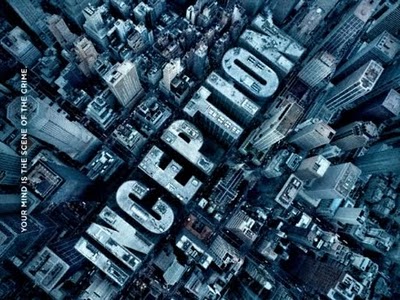
After reviewing the book about PKD in my last post, I realized I’d said nothing about the film Inception, which I saw a few weeks ago. I’m going to come out and say what I think about the film, and what it means for cinematic SF, but save the spoilers (and much of my explanation) for the extended part of this post, so that those who wish can avoid the spoilers. (Note, if you’re reading on the RSS feed you might not have a cut. I’ll warn you.) So, what is Inception? It’s one of the most Phildickian films I’ve …
I Am Alive and You Are Dead: A Journey into the Mind of Philip K. Dick by Emmanuel Carrère (Trans. Timothy Bent)
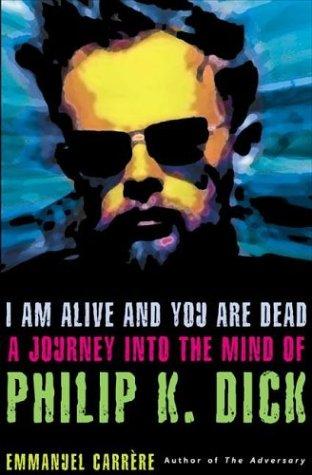
This is, as the author himself puts it, “a very peculiar book,” but for me, it was an unusually quick read, I think partly because of its very oddness. First, the good: I found it fascinating. I found it fascinating how Carrère sketches out what he understands to be the relationship between Dick’s life and his writing, a pattern that immediately brought to mind Rudy Rucker’s notion of transreal fiction — fiction that is essentially SFnalized autobiography — as he discusses it in this essay. Well, and as I mentioned recently, Wikipedia claims Rucker came up with the idea after reading …
박민규의 지구 영웅 전설과 카스테라
Park Min Gyu is a Korean author that has been recommended to me by several people, independent of one another. After hearing about my novella “Wonjjang and the Madman of Pyongyang,” Stephen Epstein recommended Park’s book 지구 영웅 전설, which I’ll render here sloppily as World Hero Legend or, a little less sloppily, as The Legend of the Earth’s Superheroes, a novel featuring a Korean supe who supposedly sets out to become a superhero and ends up calling himself “Banana-man” and ends up being a kind of gopher or page for American heroes like Superman and Wonder Woman (who sends …
Subways and Culture
Once again, I’m linking to Matt’s site, this time where he links an article on how the seats reserved for the old, pregnant, ill, weak, and disabled are, well… some old people seem to think those seats are just for old people, and doing things like shouting at pregnant women for sitting in those seats. Or, in one case, getting into a fight to the death over who gets to sit there. And, well, you know how it is: nobody’s really stepping up to tell them, “No, you have it wrong you crotchety old bastard, now STFU before someone knocks …